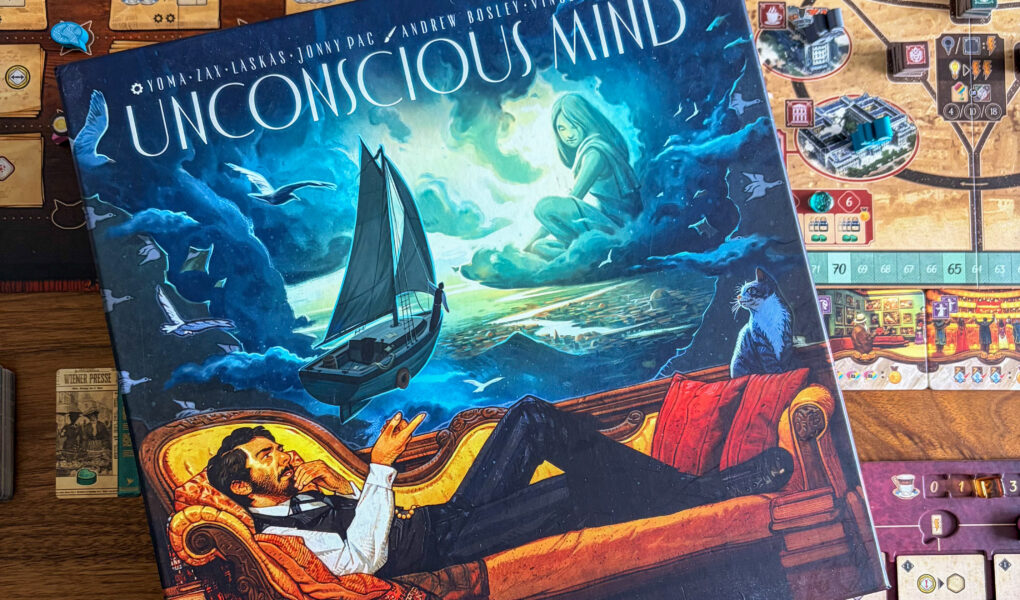
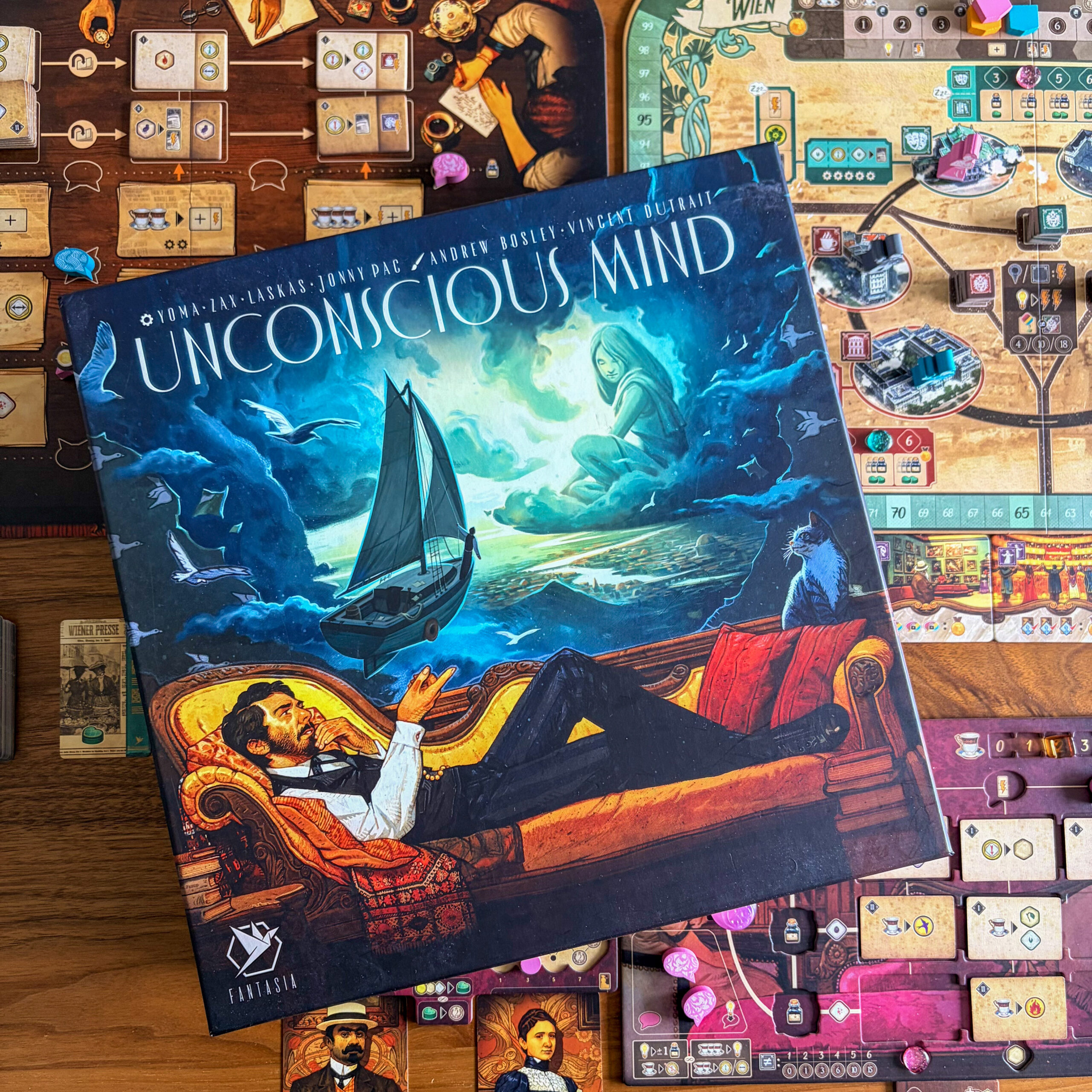
Summary
👥 A game for 1 to 4 players
⏳ Playing time is 60 – 120 minutes
🏢 Publisher is Fantasia Games
Introduction
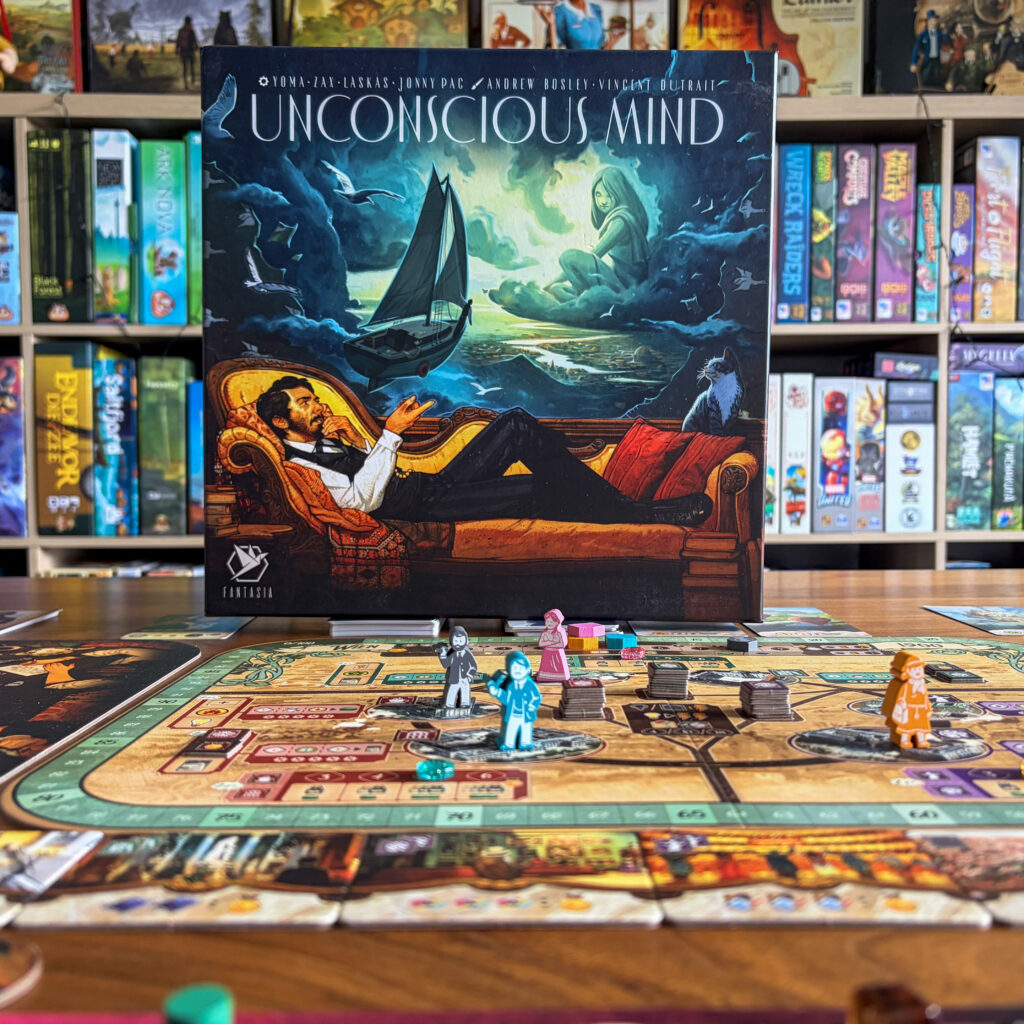
Unconscious Mind takes players back to the early twentieth century, where the ideas of Sigmund Freud and his contemporaries forever changed the field of psychology. In this thematic eurogame, you step into the shoes of a psychoanalyst developing new theories, treating clients, publishing research, and striving to become Freud’s most respected colleague. The result is a remarkable game in which theme and mechanics are woven together exceptionally well.
Let’s get it on the table
The game is played over a series of rounds in which players take turns choosing one of three possible actions: State Ideas, Recall Ideas, or Treat Clients. Every turn is about deciding whether to expand your possibilities, capitalize on the resources you have built up, or focus on healing your clients.
Throughout the game, you gradually build a personal engine. You acquire Notebook tiles that provide powerful effects, develop your Insight Dial with different types of insights, publish Treatises, and work toward curing clients. At the same time, you are trying to increase your reputation, as reputation not only determines when the game ends but also grants valuable bonus points during final scoring.
During your turn, you have the following actions
State Ideas
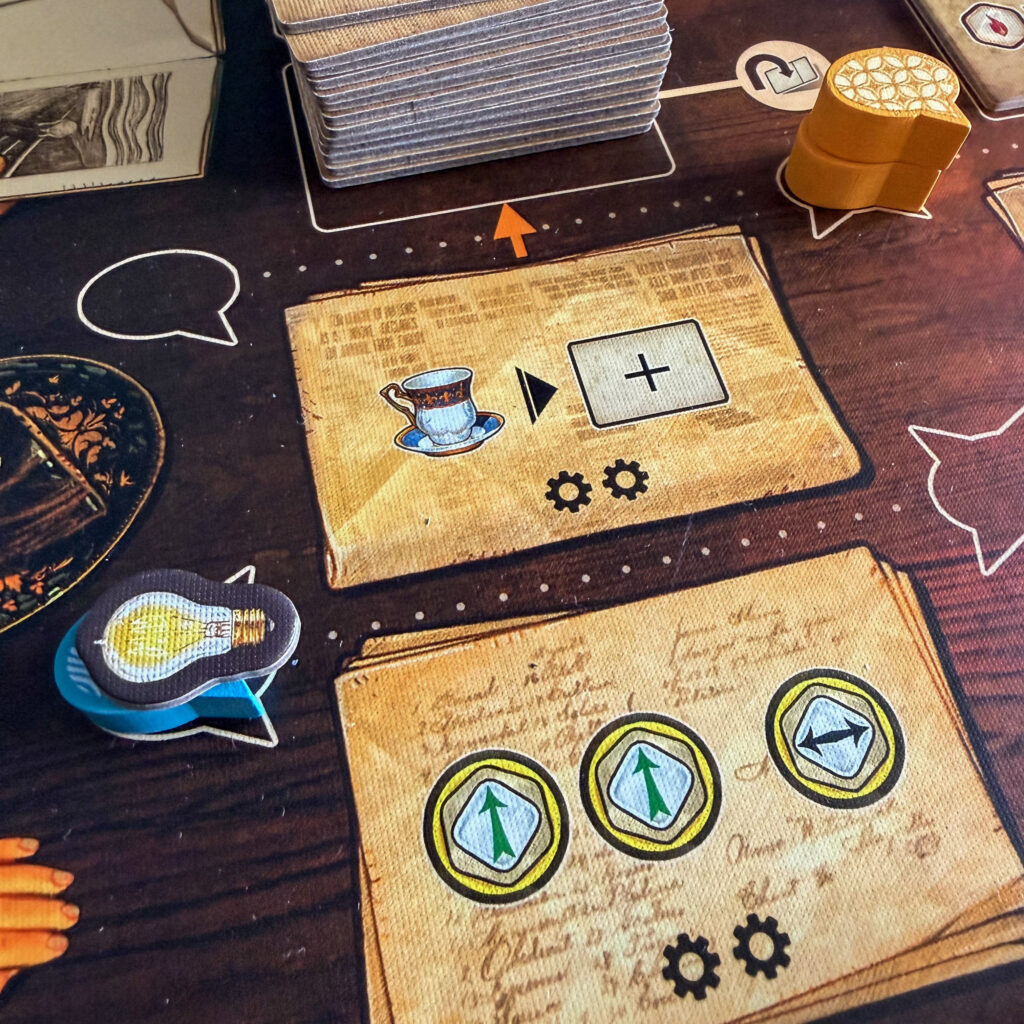
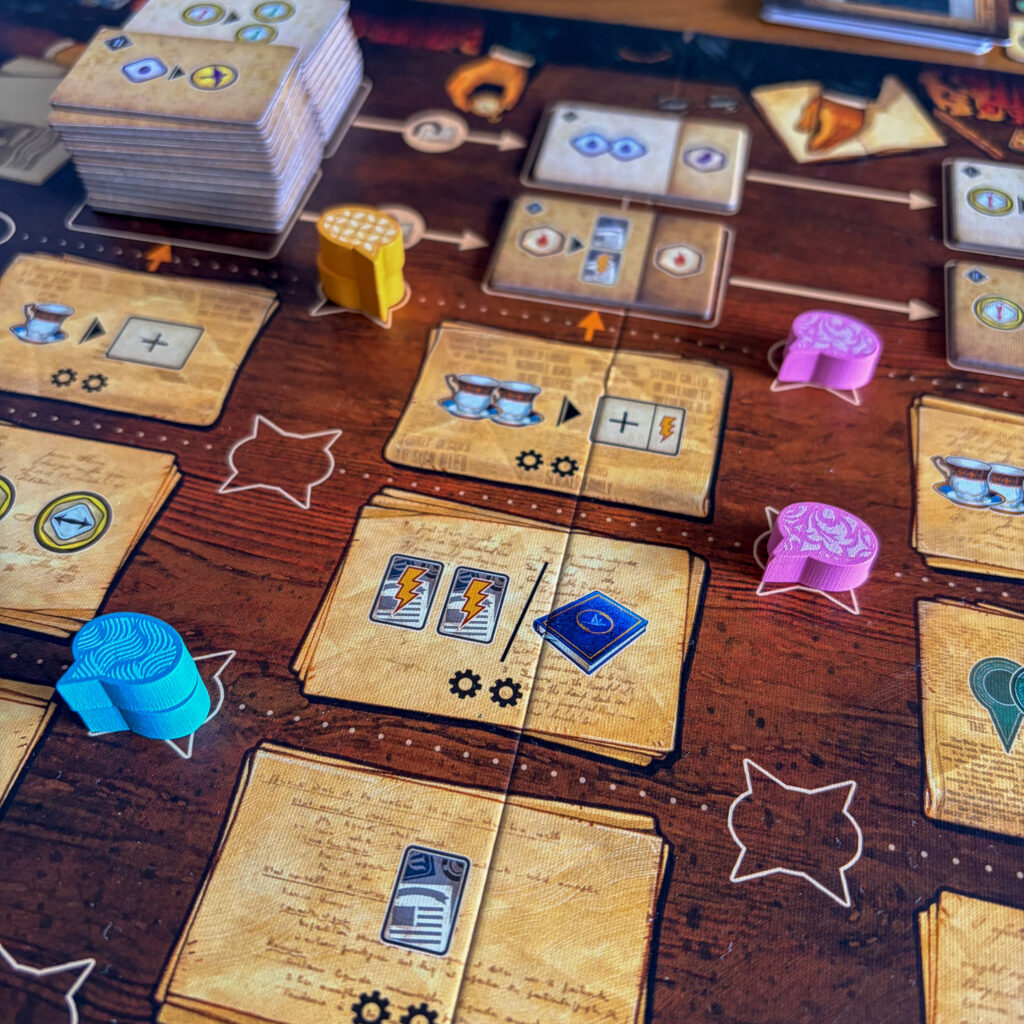
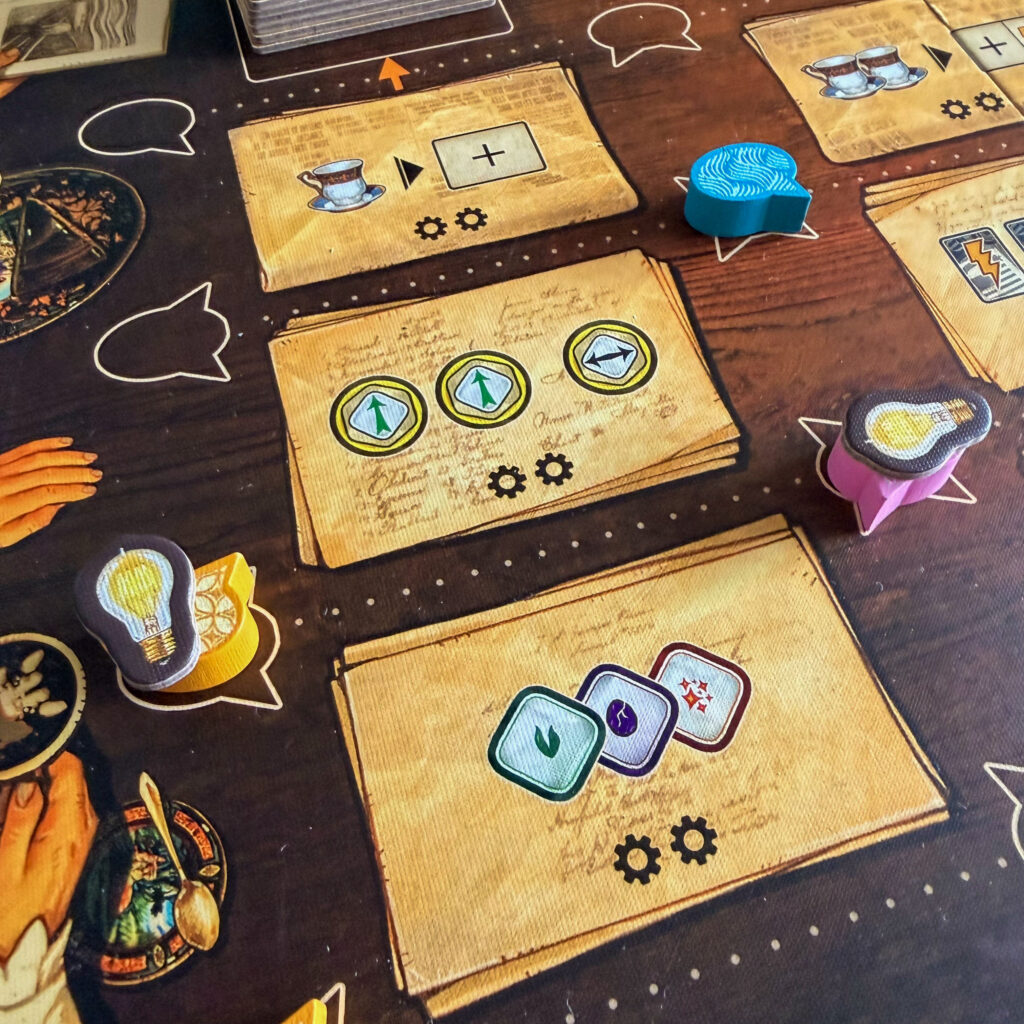
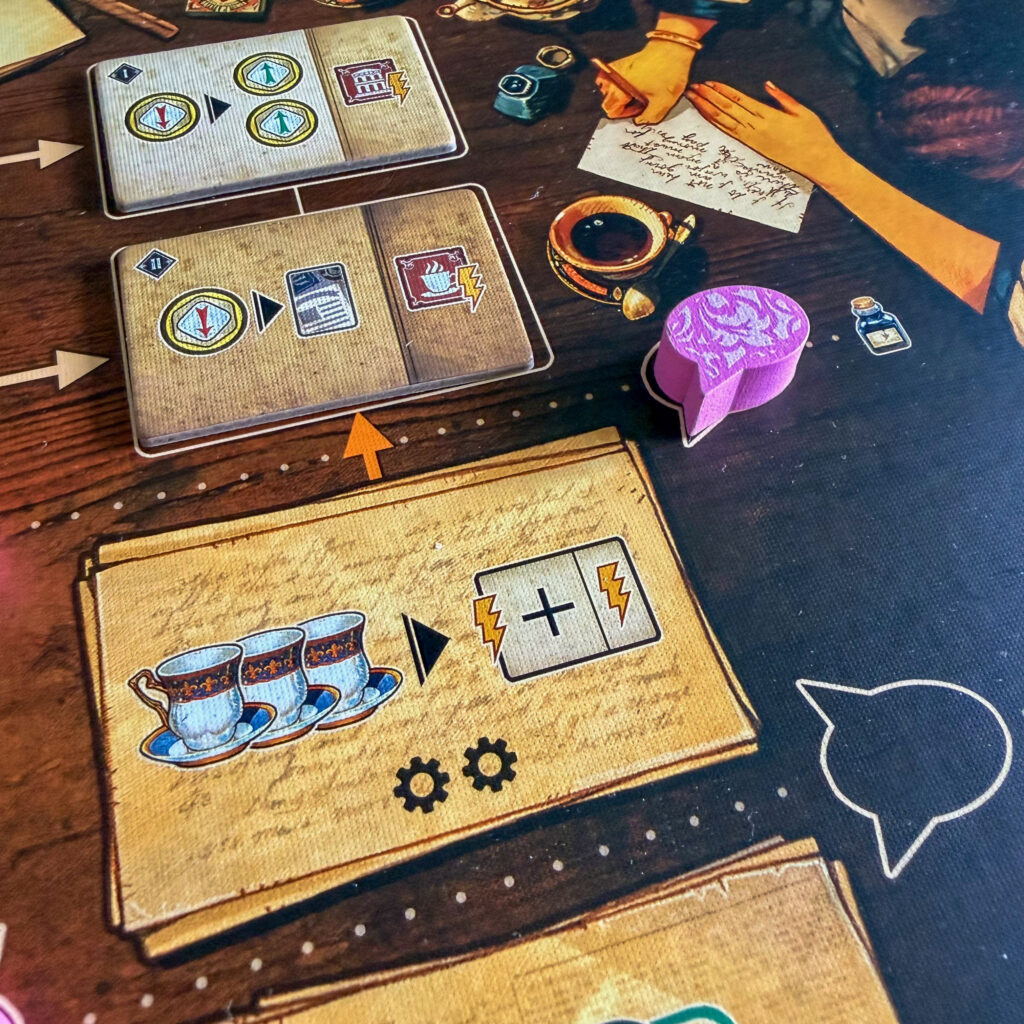
First, you place one or two Idea tokens from your supply onto an empty space on the Meeting Table. The direction in which you place these ideas matters because the tails of the tokens point toward the adjacent action you want to activate. If you place two ideas, you may perform that action twice. Bright Ideas can also be used as substitutes.
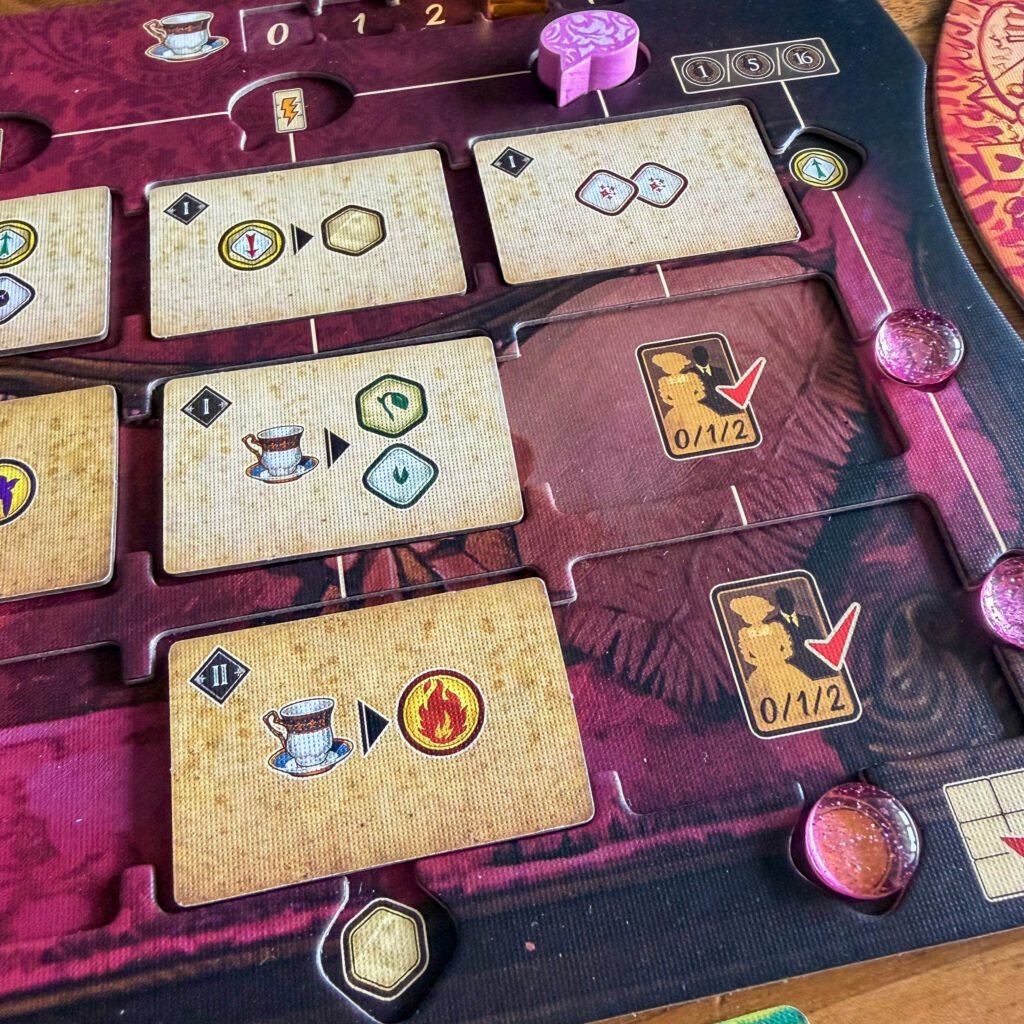
After placing your ideas, you resolve the chosen action(s) on the Meeting Table. These actions allow you to draw Research cards, publish research, manipulate insights, or acquire new Notebook tiles by spending coffee. The Notebook tiles are particularly important because they add new effects to your personal board and eventually complete rows and columns that unlock additional benefits.
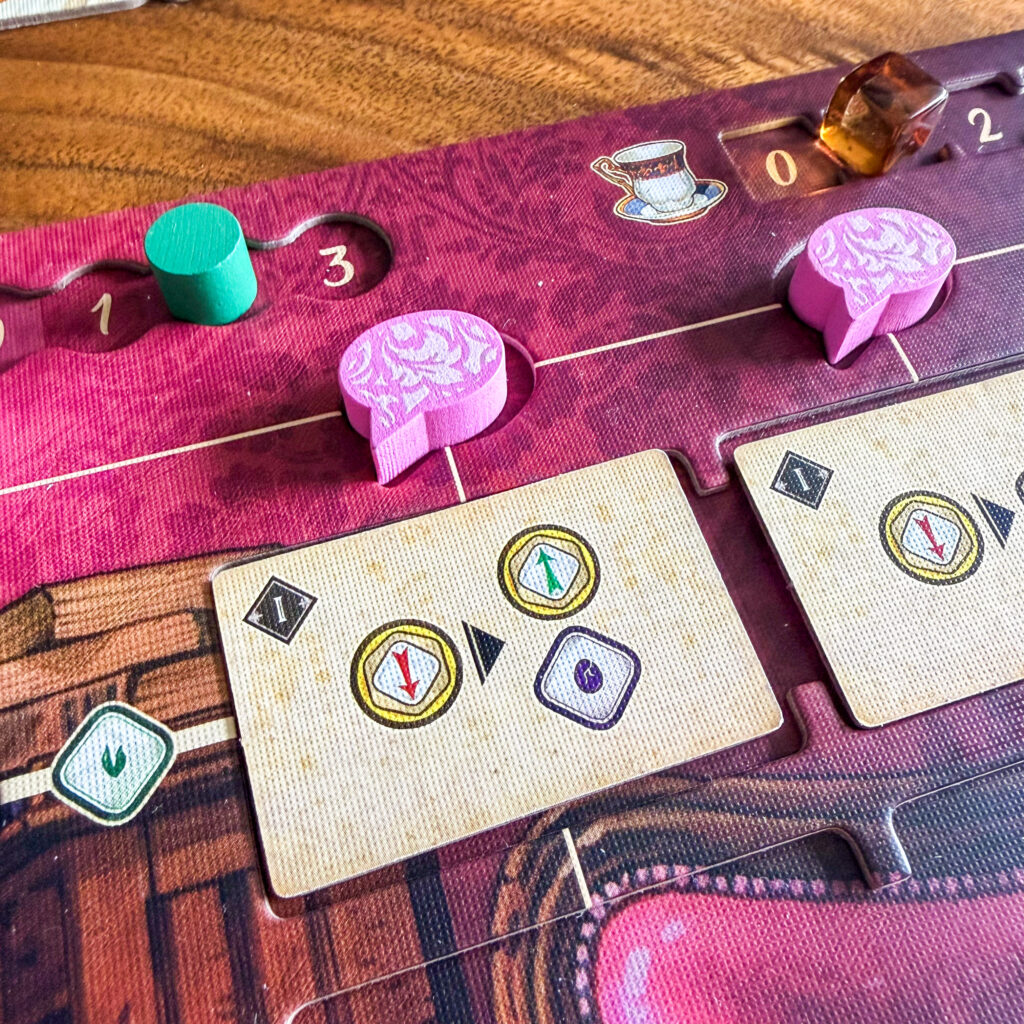
Next, you activate your Inkpot. The distance the Inkpot moves is determined by the row of the Meeting Table where you placed your ideas. Once the Inkpot stops, you activate a row or column of Notebook effects on your player board or trigger the Reputation Track. By cleverly combining multiple Notebook tiles, you can create powerful chain reactions that generate, upgrade, or transform insights into other benefits.
Recall Ideas
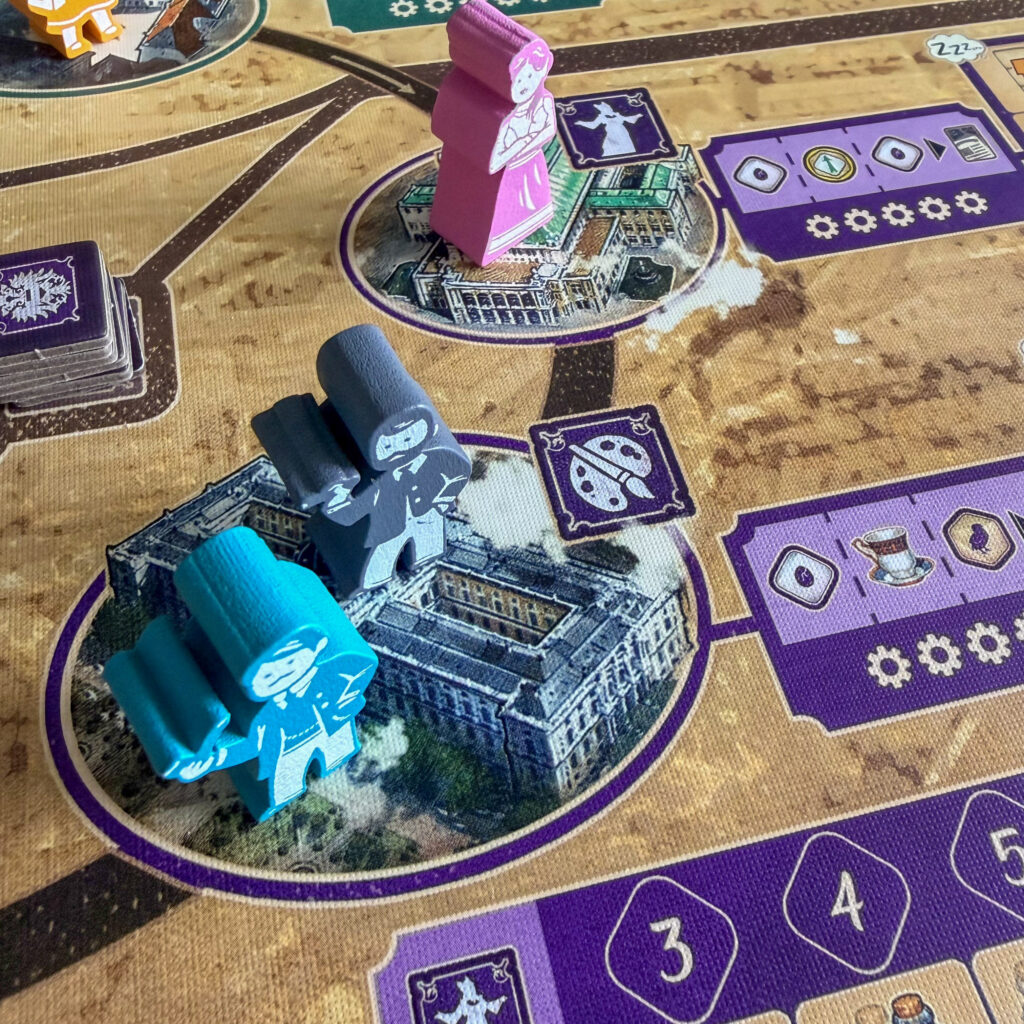
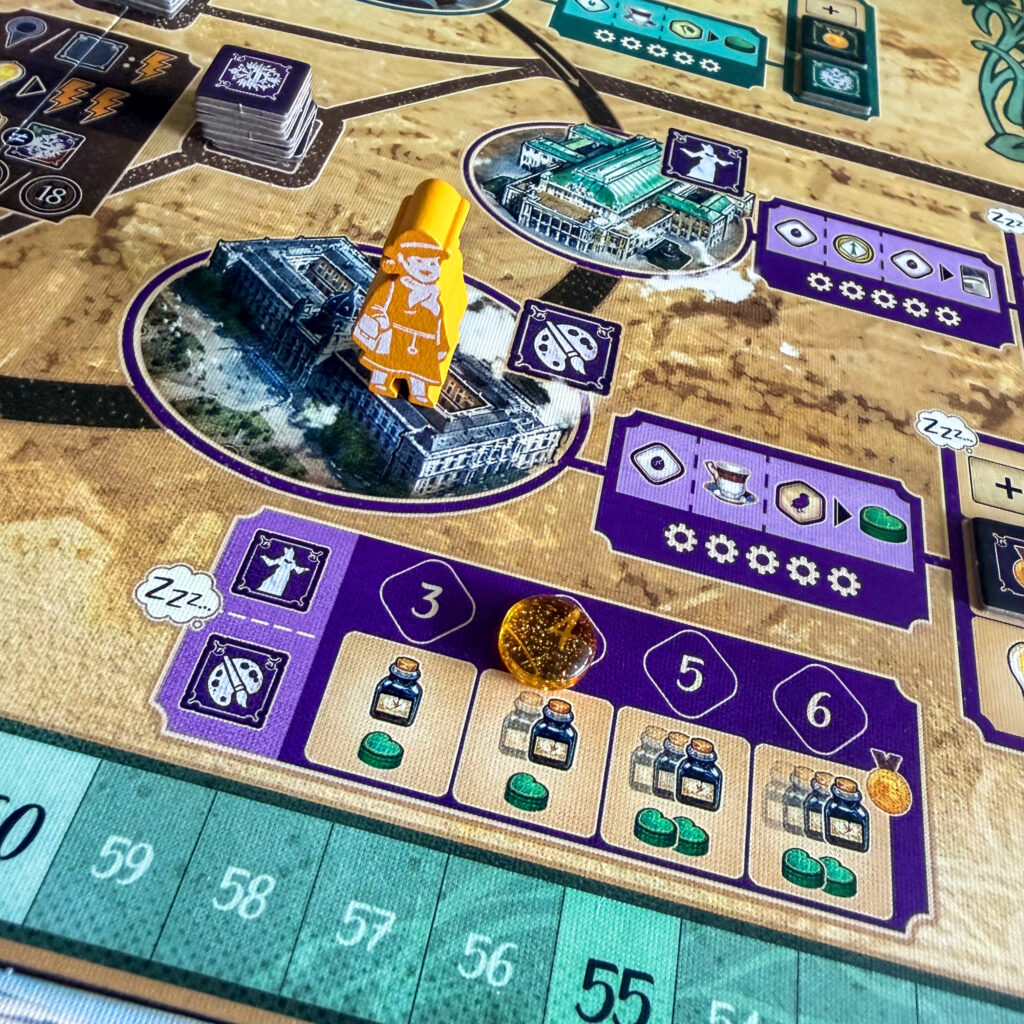
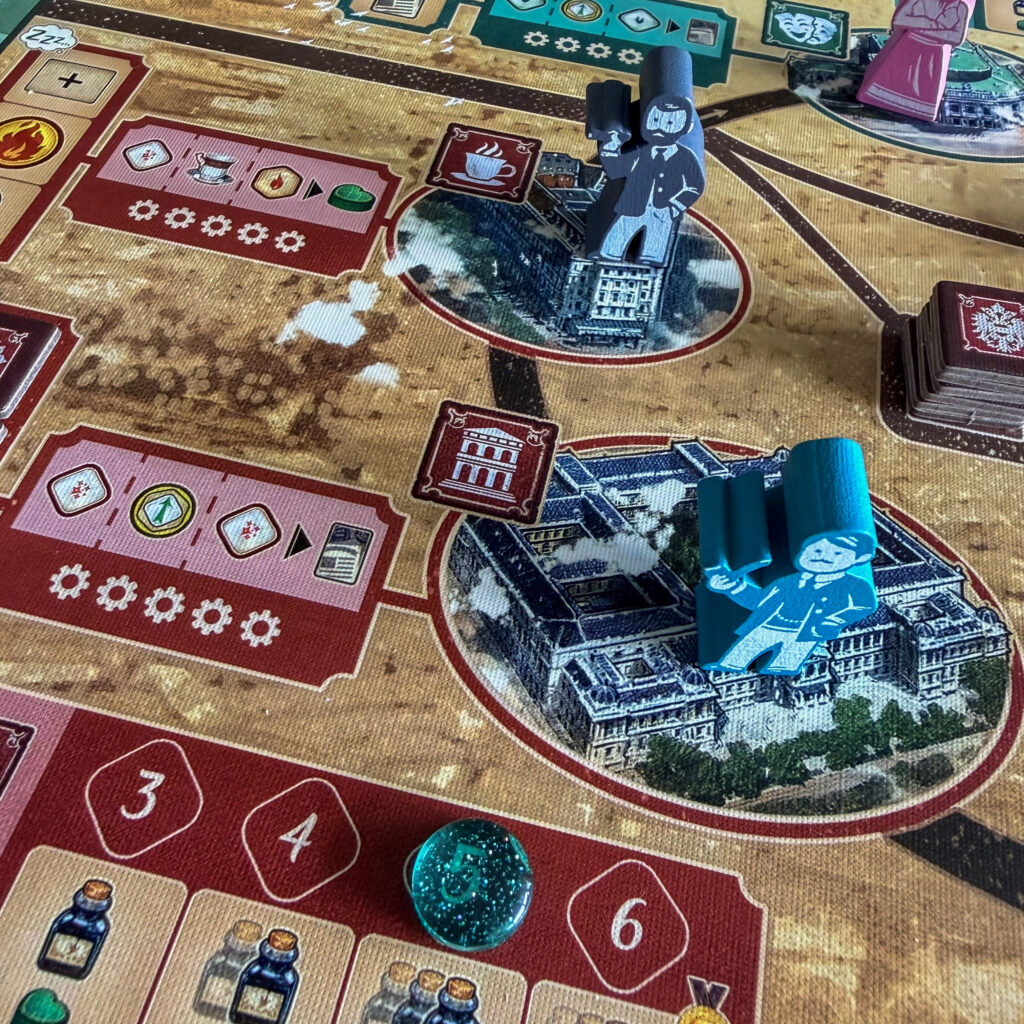
During a Recall Ideas turn, you retrieve previously placed ideas from the Meeting Table. At the same time, you move your professor around the city map of Vienna and attempt to make the most of its locations and districts.
The city consists of several districts and locations featuring unique tags such as Theatre, Library, University, Café, Opera, and Museum. By collecting the right combinations of tags and strategically positioning yourself on the map, you can claim valuable bonuses and gain reputation. This action forms an important puzzle within the game because it not only replenishes your supply of ideas for future turns but also contributes to area control and end-game objectives.
Treat Clients
The third main action is treating clients, which is arguably the most thematic part of the game.
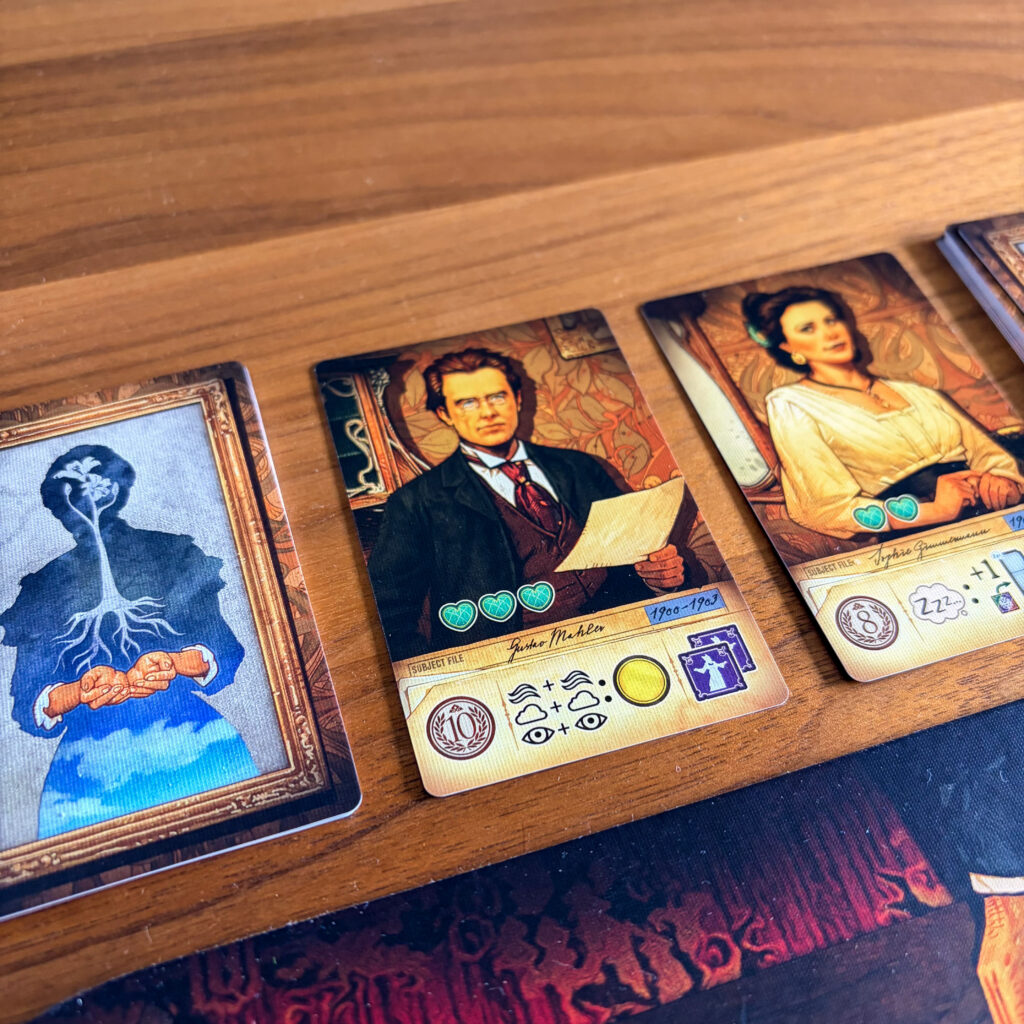
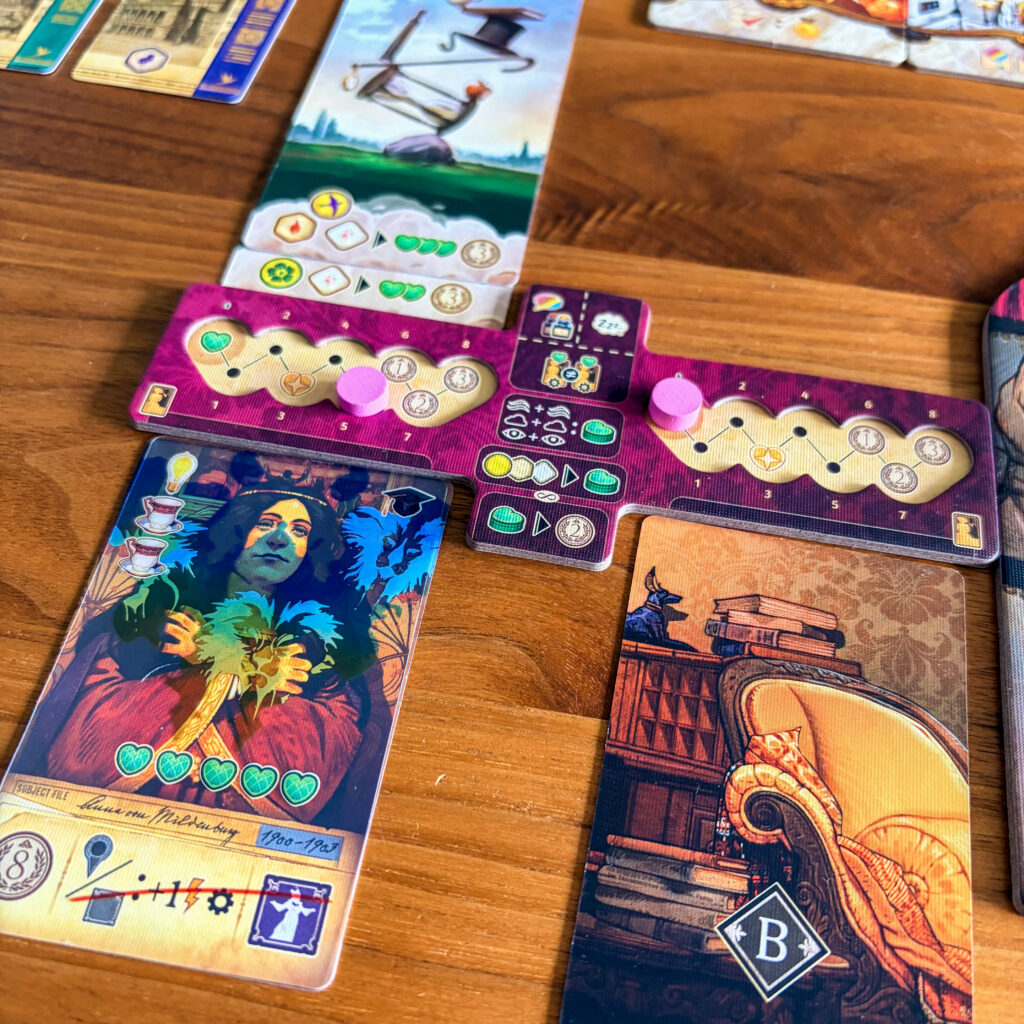
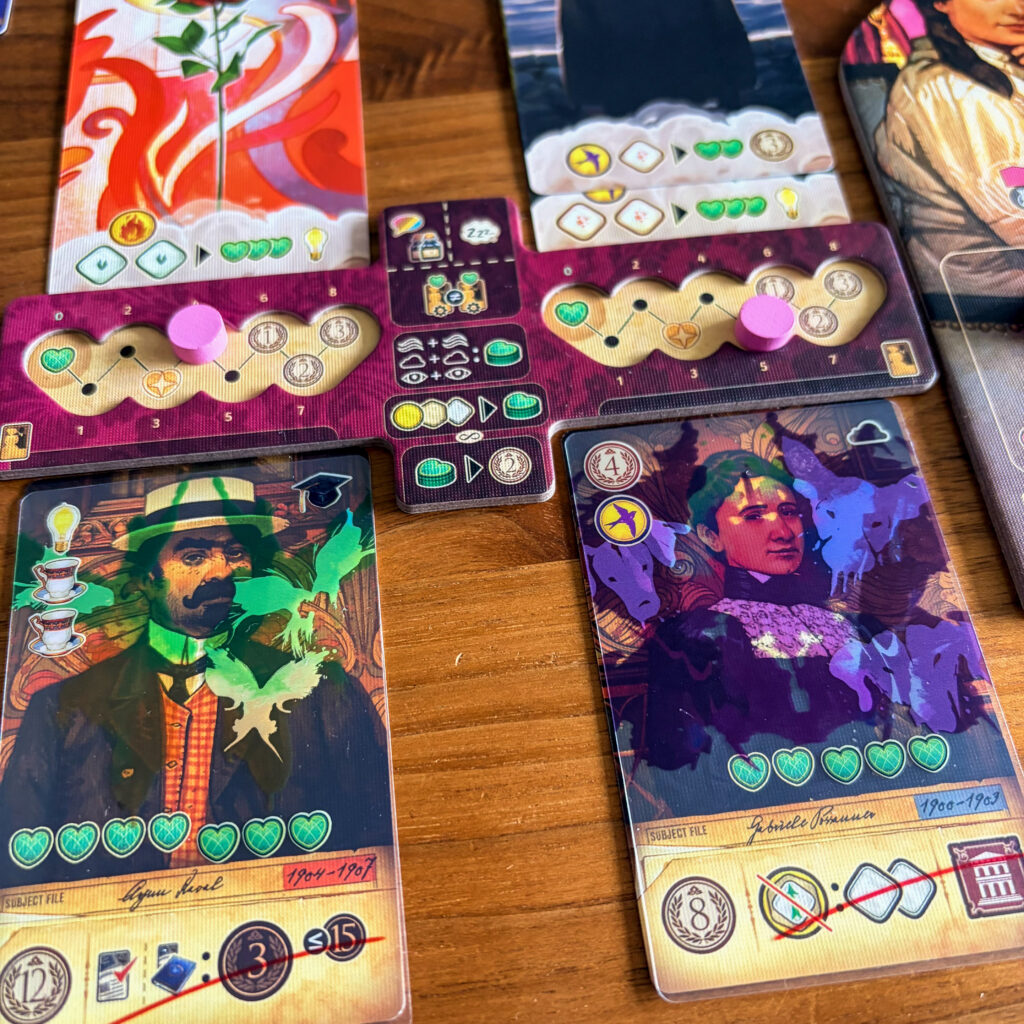
Each client has a therapy track, dream cards, and a Grief Layer that represents psychological barriers. To treat a client, you use the topmost Dream card and pay the required Insights from your Insight Dial. You then resolve the Dream’s effects, which usually generate Therapy points and may also provide additional bonuses or victory points.
For every Therapy point gained, you move the client’s therapy marker one space to the left along their therapy track. Along the way, you can immediately score victory points. Once the marker reaches a certain point, the client experiences Catharsis. You gain the rewards shown on the Grief Layer and permanently remove it. From that moment onward, the client’s special abilities and tags become active.
When the therapy marker eventually reaches the end of the track, the client is fully cured. You immediately score the victory points shown on the client card and make room for a new client in your practice.
Important Systems and Mechanics
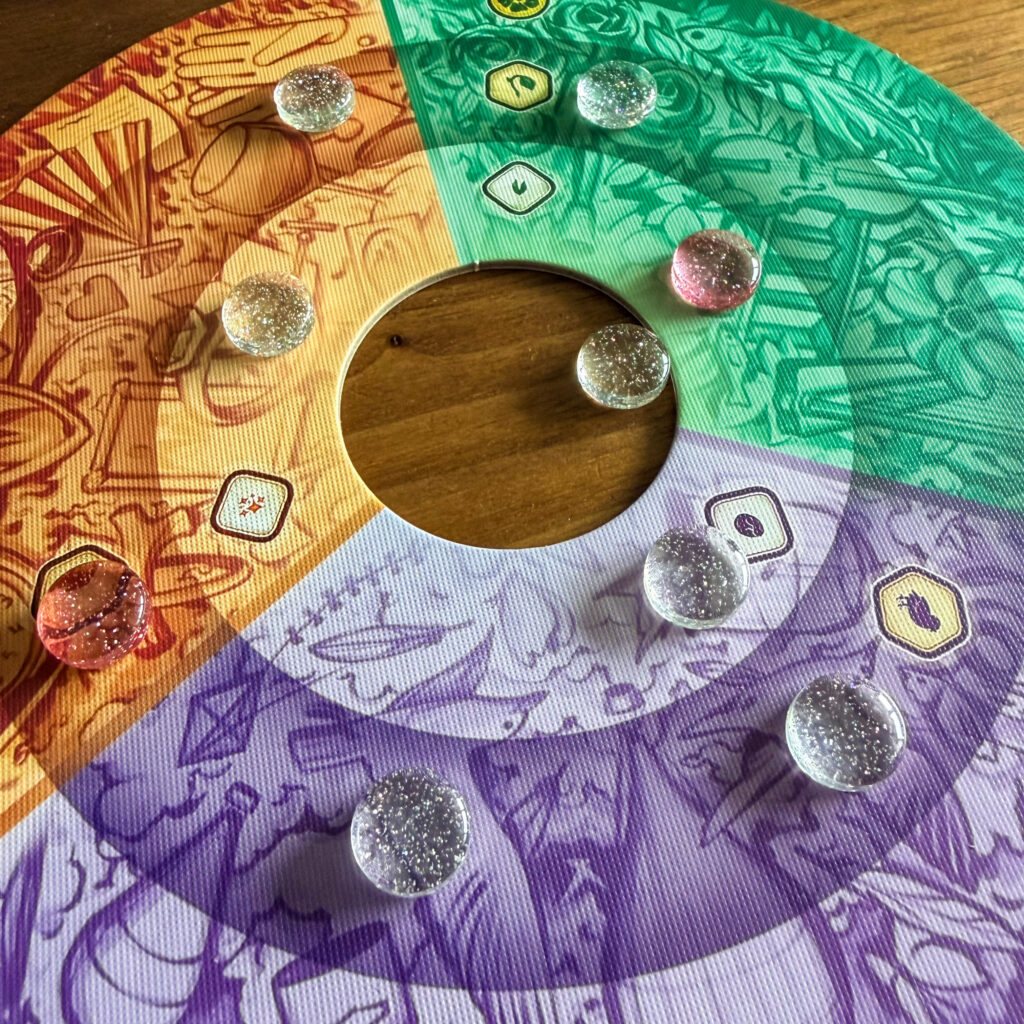
The most unique mechanism in Unconscious Mind is undoubtedly the Insight System. Insights come in three qualities (Growth, Freedom, and Passion) and three levels (Minor, Median, and Major). On your personal Insight Dial, you constantly manipulate these insights throughout the game. Some effects generate new insights, while others upgrade, downgrade, or transfer them to a different quality.
Because nearly every important action requires specific insights, this system truly feels like the engine driving the entire game.
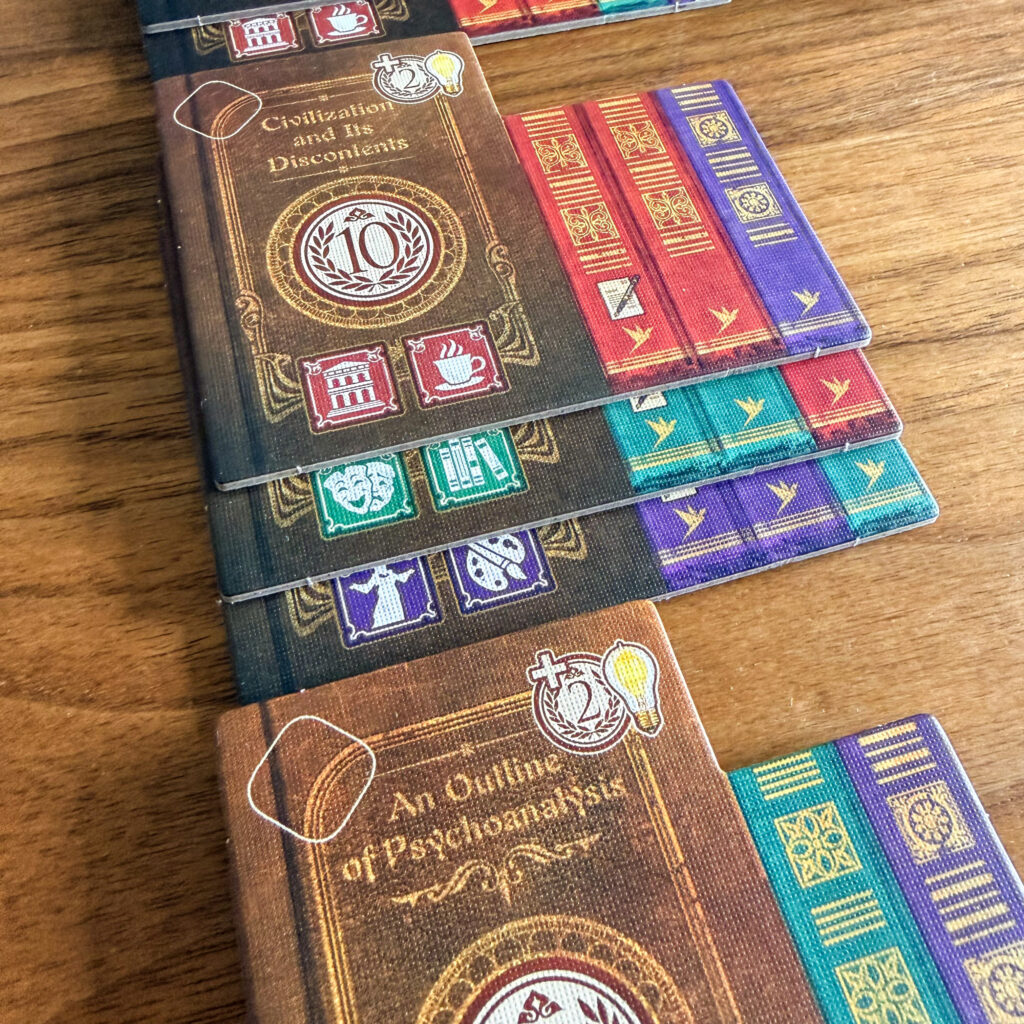
Coffee also plays a surprisingly important role. It can be used to substitute for insights, upgrade them, or even convert them into Bright Ideas. As a result, coffee acts as a highly flexible resource that can often get you out of difficult situations. Research and Treatises form another major strategic layer. Research cards provide colored volumes that are used to publish scientific works. To publish a Treatise, you must collect the exact combination of required volumes. You can even cite research from other players, allowing them to gain points and benefits in return. This creates an interesting form of indirect interaction that fits the academic theme perfectly.
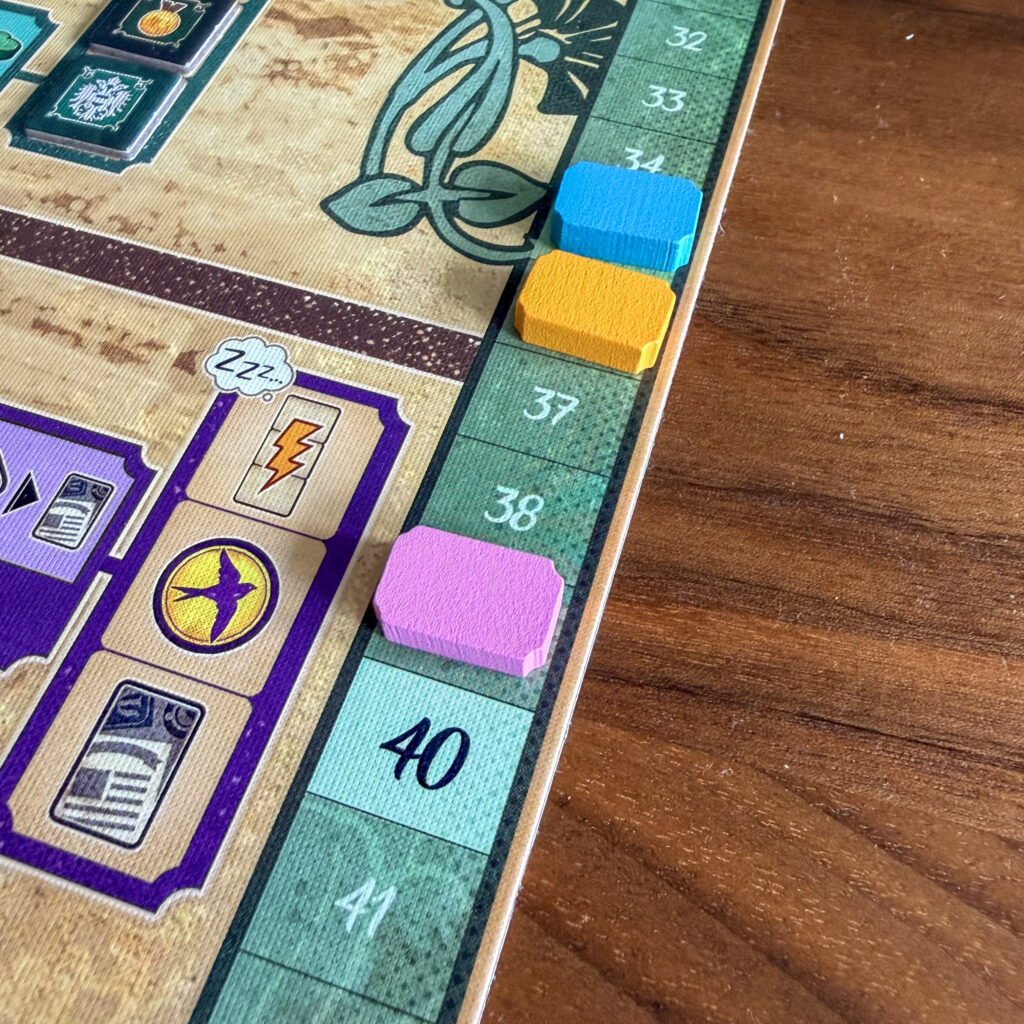
Players continue taking turns until Freud’s Reputation Marker reaches the end of the Reputation Track. This happens as players earn reputation through location goals, districts, Treatises, and various achievements.
Once the end of the track is reached, the current round is completed, followed by one final full round. After that, the game proceeds to Final Scoring. At the end of every turn, players may also use Heart-Shaped Boxes to generate additional Therapy points. Any empty office spaces must then be immediately filled with new clients and dream cards, ensuring that your practice remains active throughout the entire game.
Final Conclusion & rating
Weight: 4.02/ 5
Replayability: 8
Our rating: 7 out of 10 dices
Unconscious Mind is an impressive and highly thematic eurogame that does far more than simply use a historical setting as a backdrop. Nearly every mechanism feels intrinsically connected to the theme of psychoanalysis. Managing insights, treating clients, publishing theories, and building reputation all come together to create an exceptionally cohesive experience.
From a gameplay perspective, this is a deep and strategic game. Its many interconnected systems create a significant learning curve, but they also provide immense satisfaction once everything starts to click. Combining Notebook effects, efficiently manipulating insights, and carefully planning treatments can lead to wonderful chain reactions. It genuinely takes time to fully grasp all the systems and small rules woven throughout the game.
For players who enjoy complex eurogames with lots of actions, engine building, and a unique theme, Unconscious Mind is an easy recommendation. It demands attention and careful planning, but rewards those efforts with a rich, original, and memorable experience in which every decision feels like you’re developing a new theory about the human mind.
🙏 Thanks to Fantasia Games for providing this review copy and the opportunity to write about it.