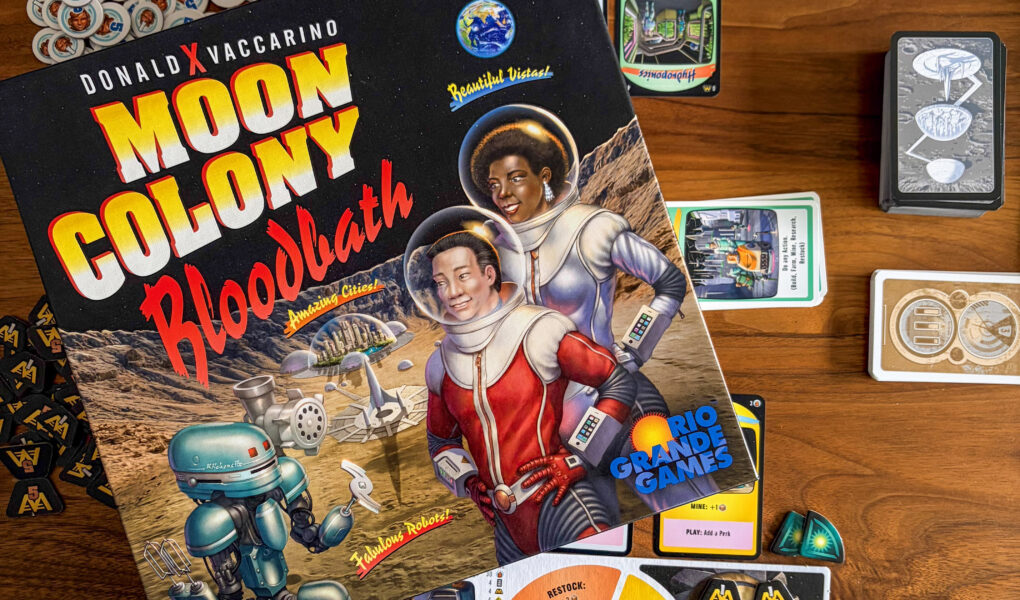
Summary
👥 A game for 1 to 5 players
⏳ Playing time is 40 – 90 minutes
🏢 Publisher is Rio Grande Games

Introduction
🚀 “They sold you a dream. The moon was the future. They lied.”
You signed the contract. New life. New world. Clean air-synthetic, but breathable.
Steel domes rose from gray dust. Machines worked without rest.
Colonists laughed, ate, built something that was supposed to last forever.
Then came the first failure.
A flicker in the lights.
A door that wouldn’t open.
A robot that didn’t stop.
Now the alarms don’t stop screaming.
Oxygen is running low. Supplies are gone. Systems are breaking faster than you can fix them. And up here, on this cold, silent rock there is no rescue coming.
Every decision matters. Every turn is a gamble. Every card… could be your last.
This isn’t about building a colony, this is about watching it fall apart, piece by piece.
Welcome to Moon Colony Bloodbath! Survive the collapse. Or become part of it.
Let’s get it on the table
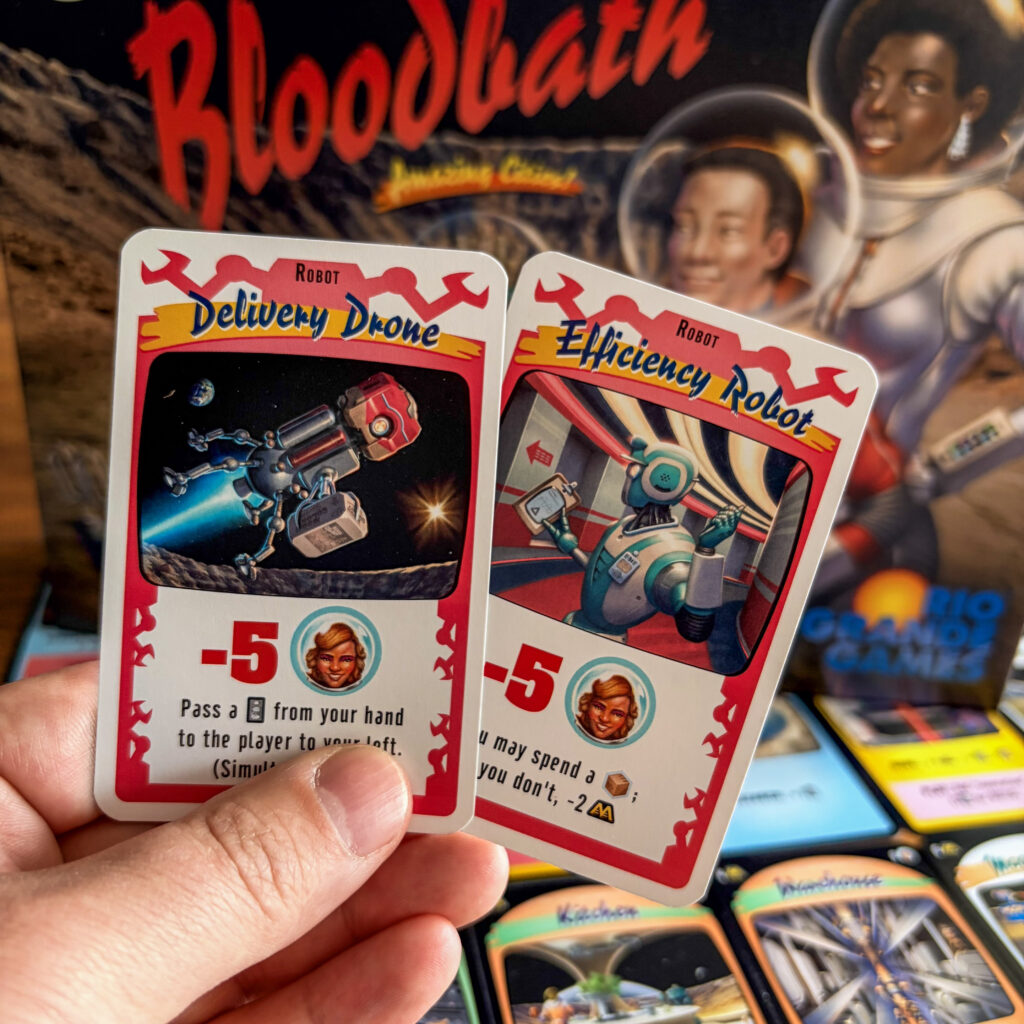
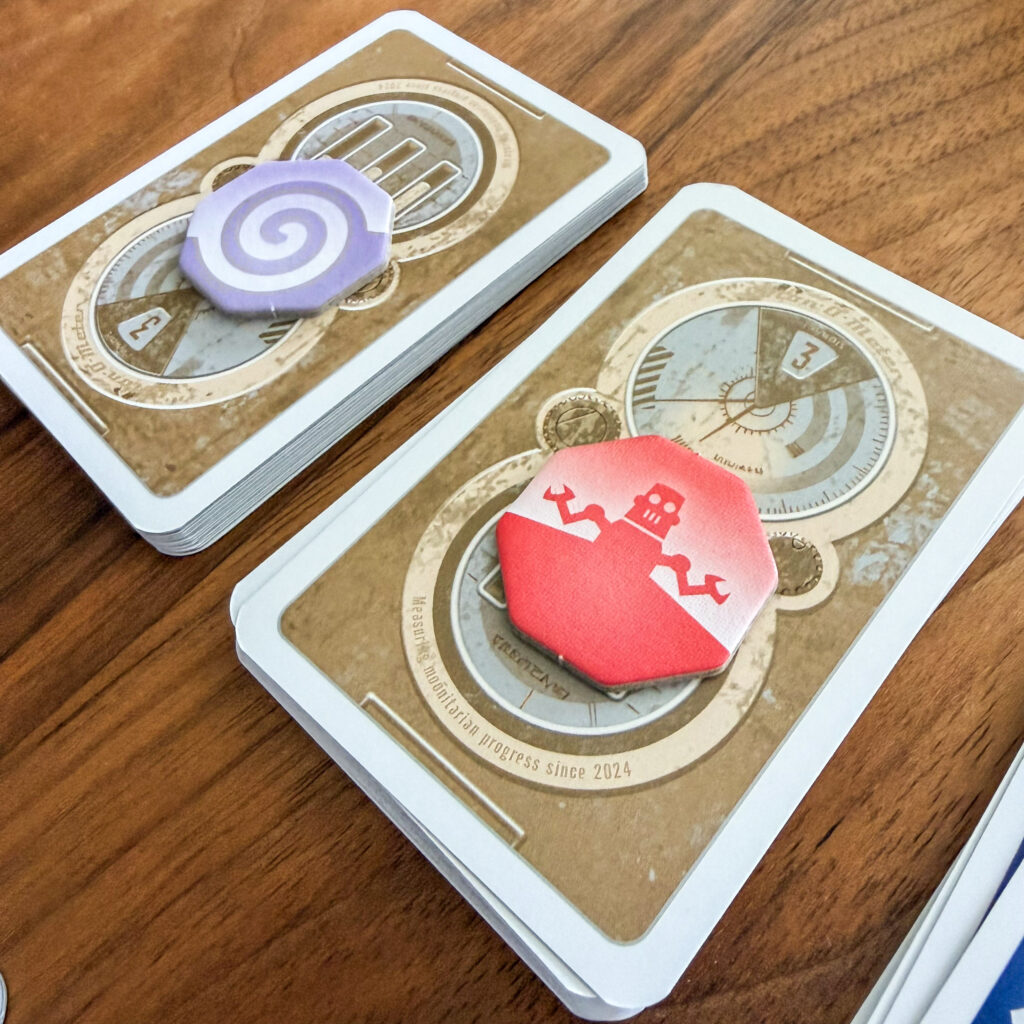
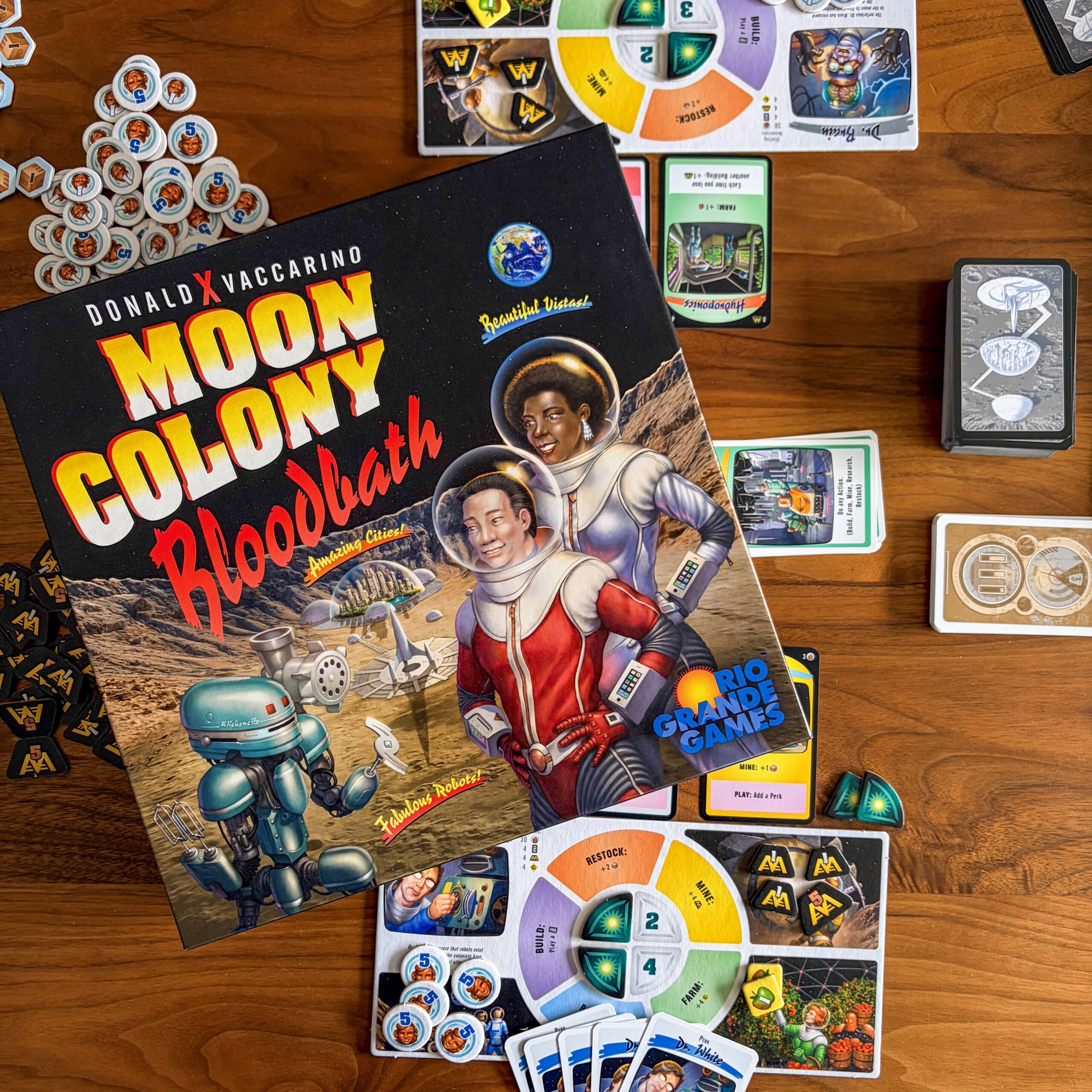
Players begin by creating the beating heart of the game: the shared deck. Take the starting cards and shuffle them into a single face-down pile, placing it in the center of the table. This deck will evolve throughout the game, slowly transforming from a manageable system into a chaotic engine of disasters and opportunity.
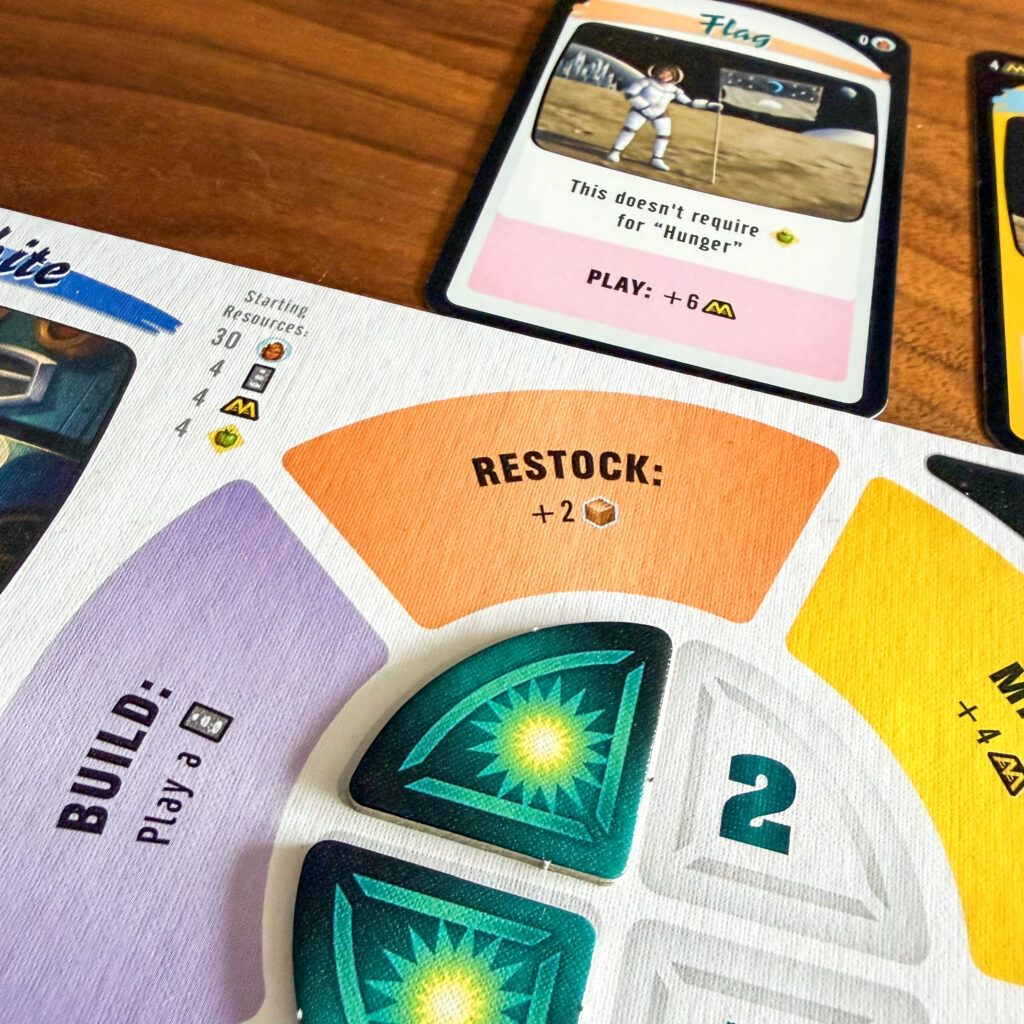
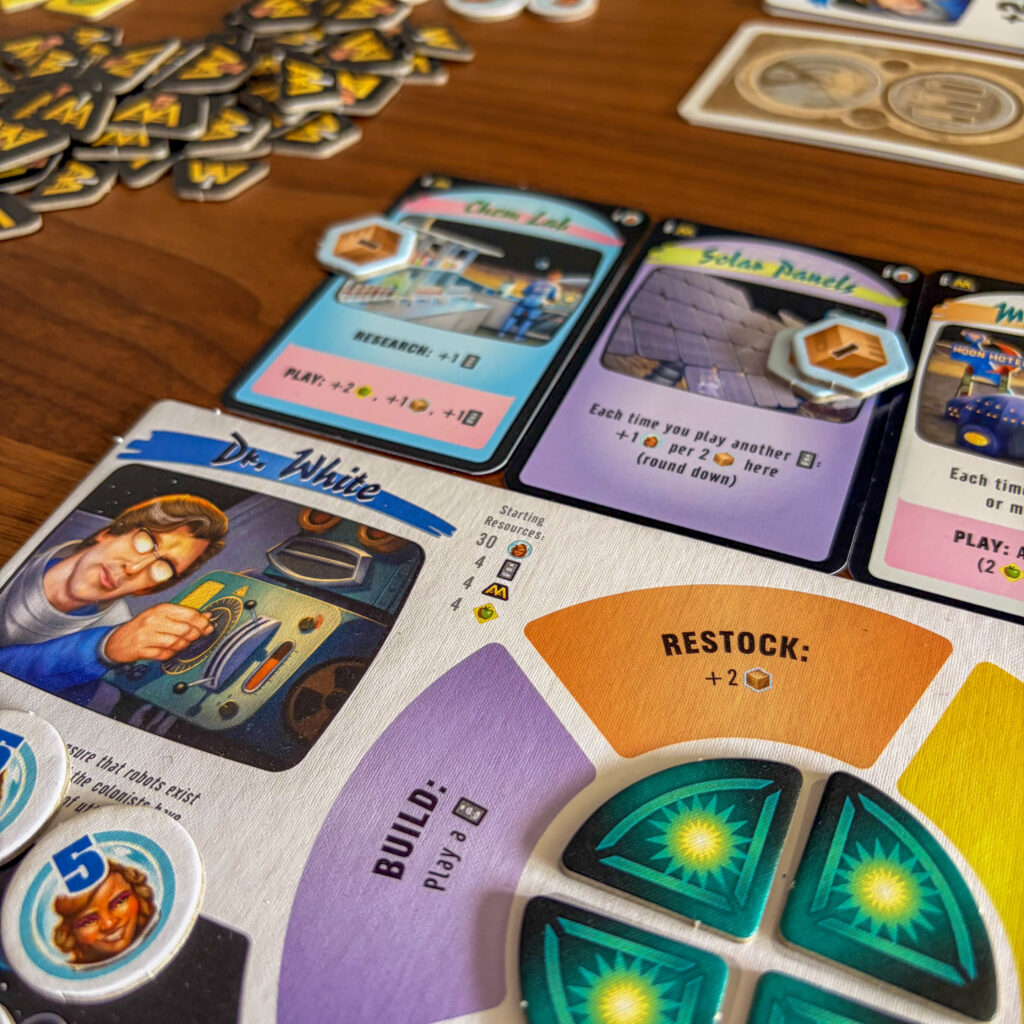
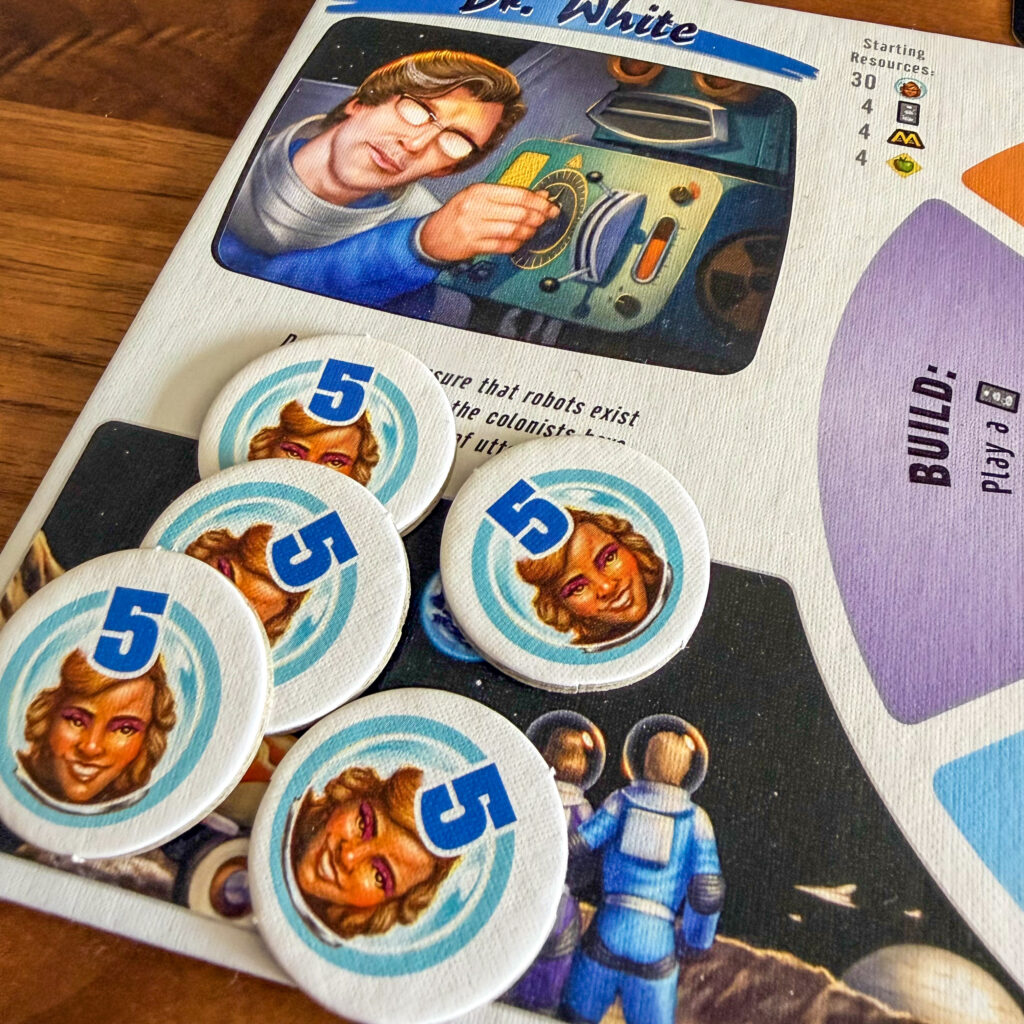
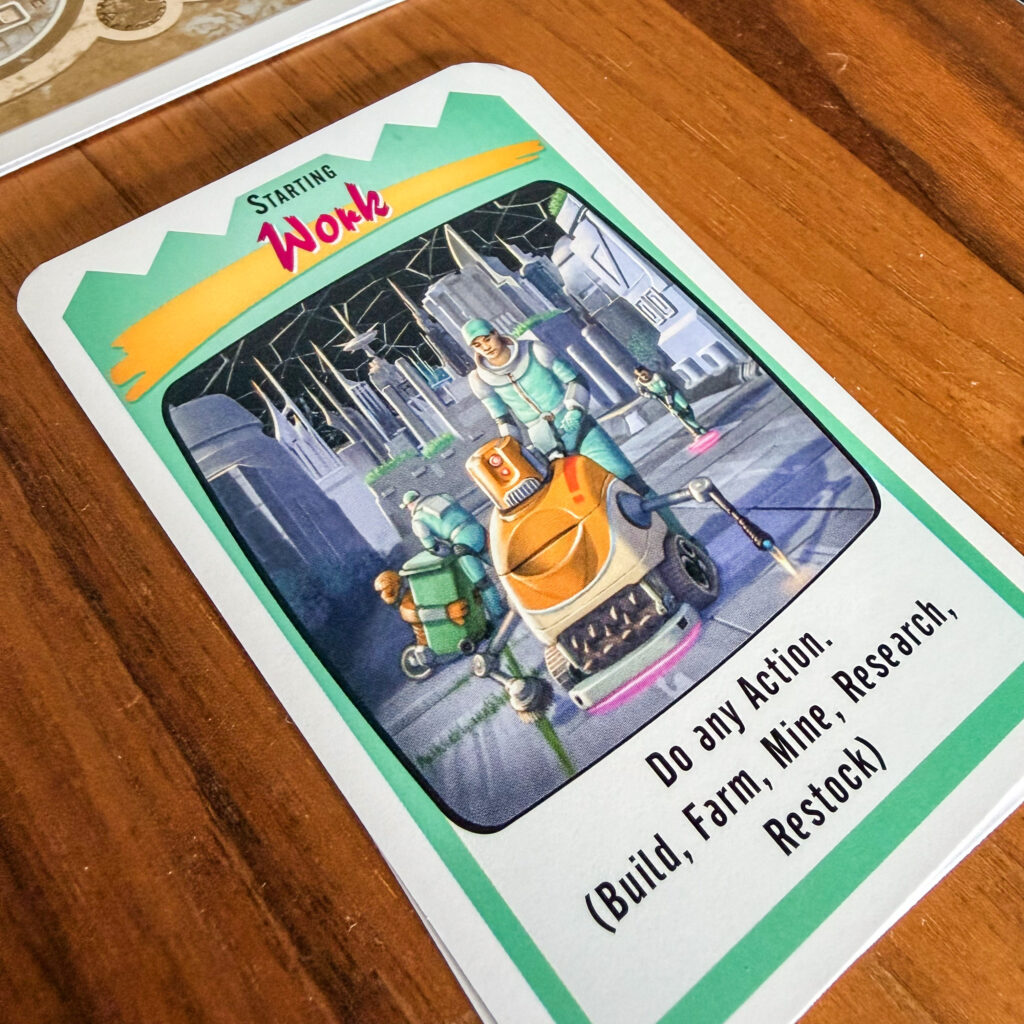
Each player then builds their own starting colony. You lay out your starting cards face up in front of you as your personal tableau and take the corresponding colonists and starting resources. This represents your fragile foothold on the moon organized, efficient, and full of promise, at least for now. Keeping your area clear and readable is important, because every turn will force you to react quickly to what the central deck reveals.
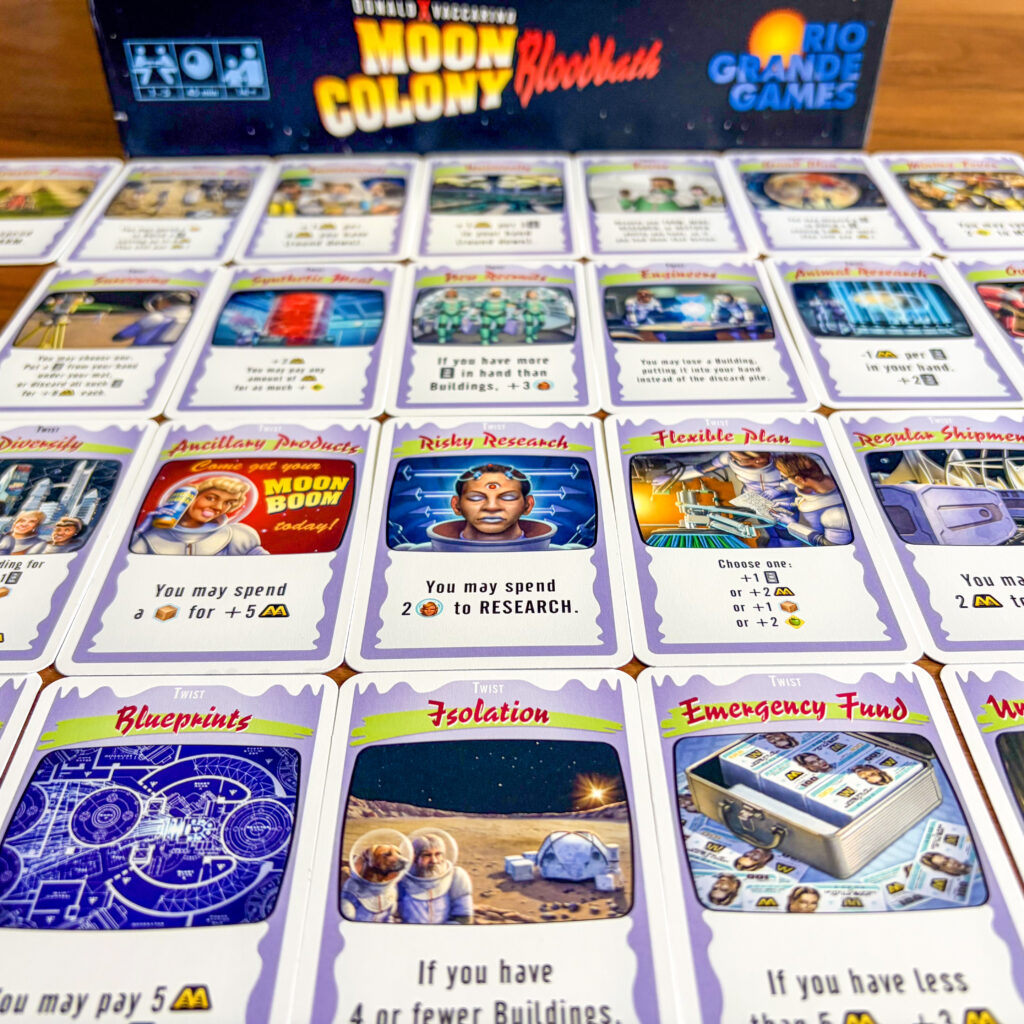
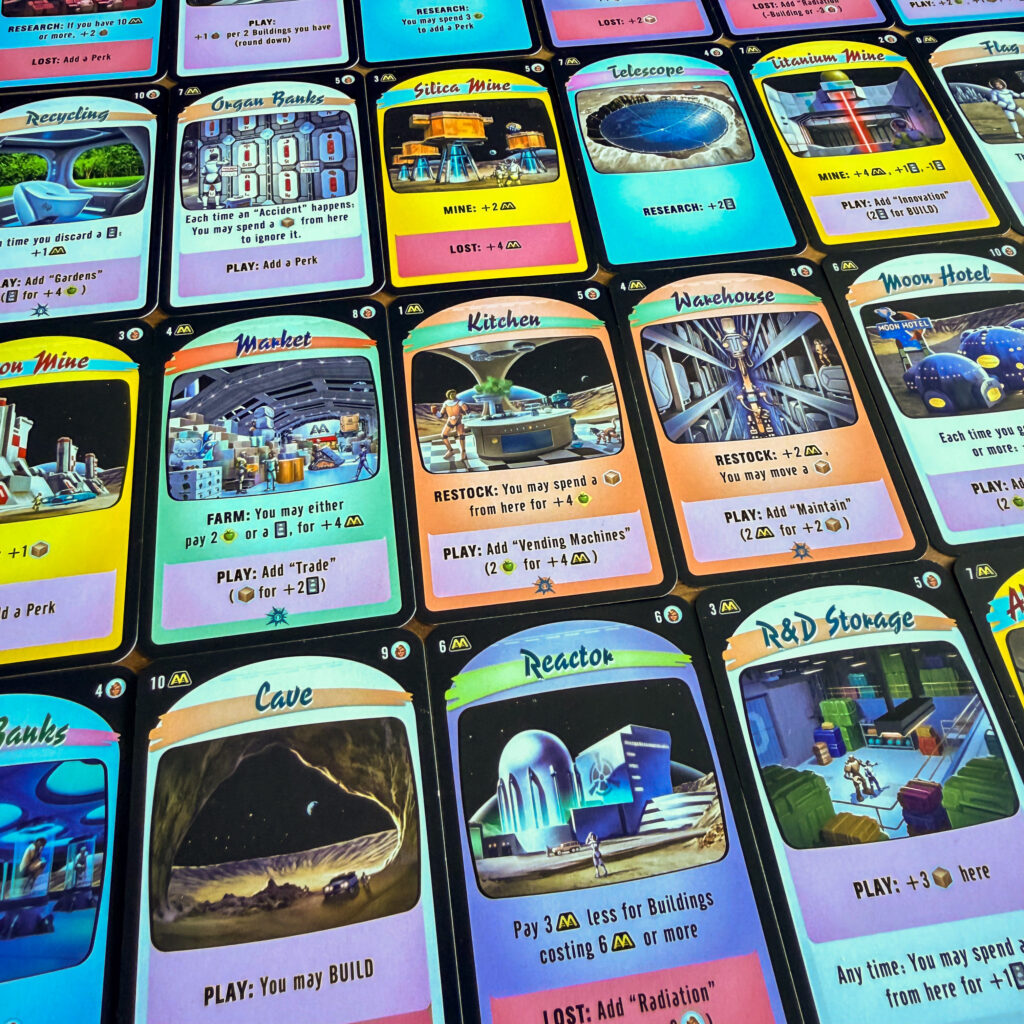
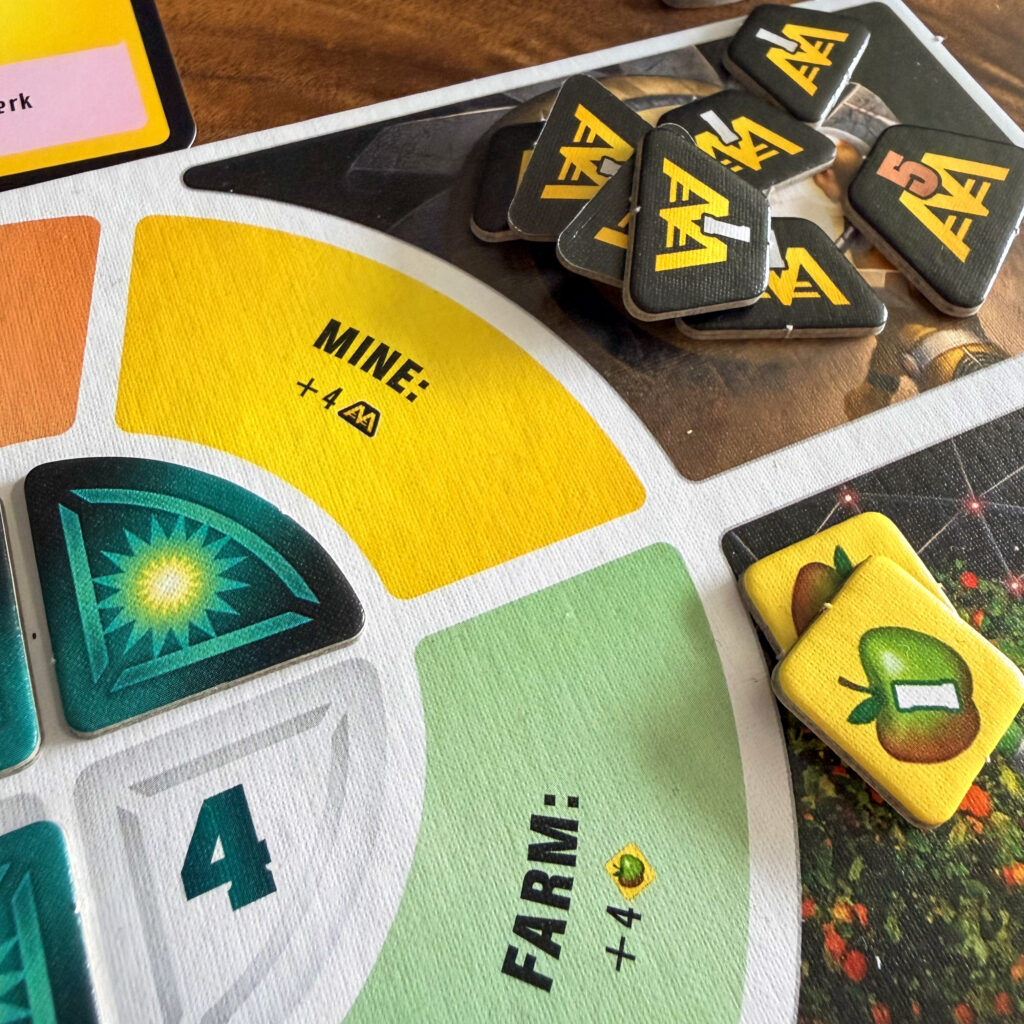
Next, you create the market by placing the available cards face up within reach of all players. These cards allow you to expand and improve your colony, but they also contribute to the growing instability of the shared deck as the game progresses. All resources and tokens should be placed nearby so they are easy to access during play.
Once everything is in place, choose a starting player. From that moment on, there is no gentle introduction. The first card from the central deck is flipped immediately, and all players resolve its effect together. What begins as a controlled setup quickly spirals into a tense fight for survival, as your carefully built colony starts to unravel piece by piece.
The story doesn’t unfold turn by turn, it unravels. What starts as a carefully planned colony quickly turns into a fight against a system that is spiraling out of control, and every player is caught in the same collapsing machine.
The game flows through a single shared rhythm. At the beginning of each round, a card from the central deck is flipped, and whatever it reveals happens to everyone at once. Sometimes the colony systems cooperate, producing resources, activating machinery, or giving you just enough breathing room to expand. But just as often, the deck turns against you.
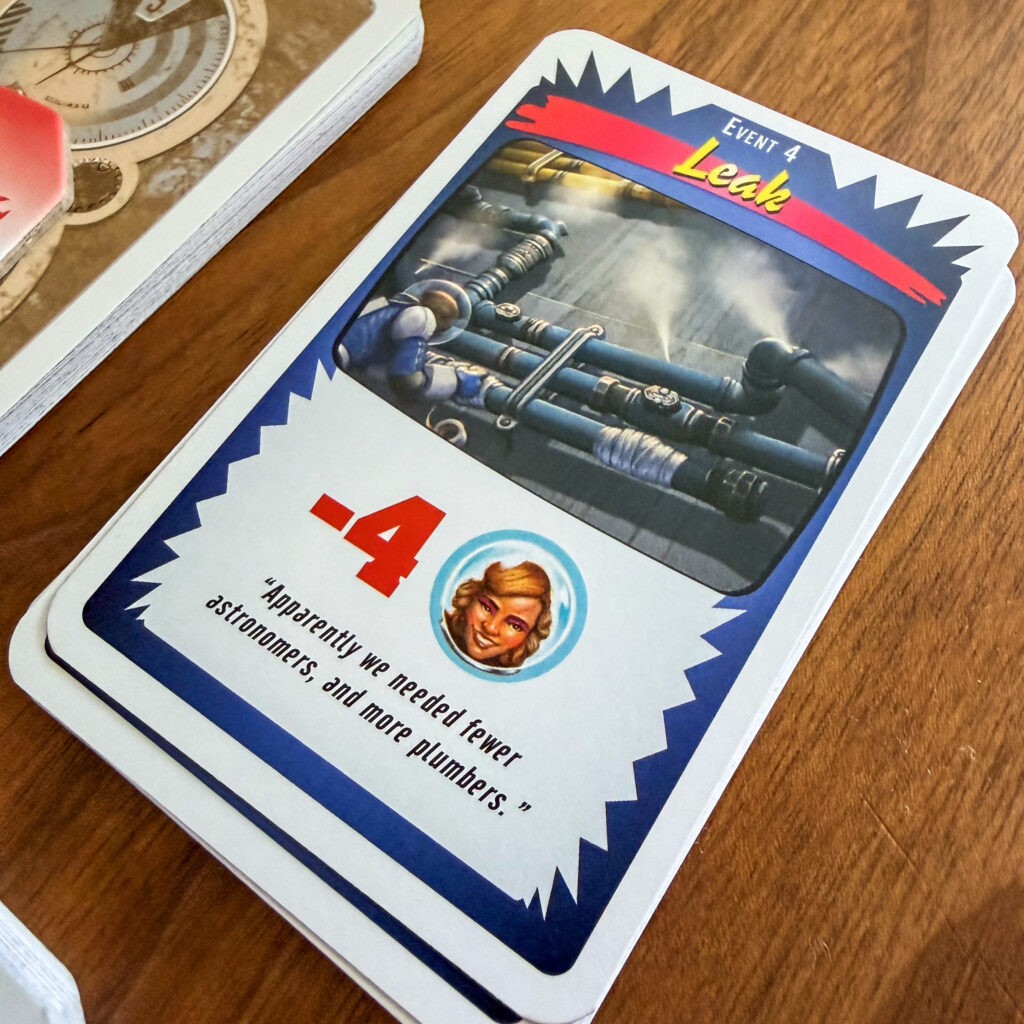
Failures cascade through your colony, supplies vanish, and colonists are lost in an instant. There is no safe turn, only moments where things go slightly less wrong.
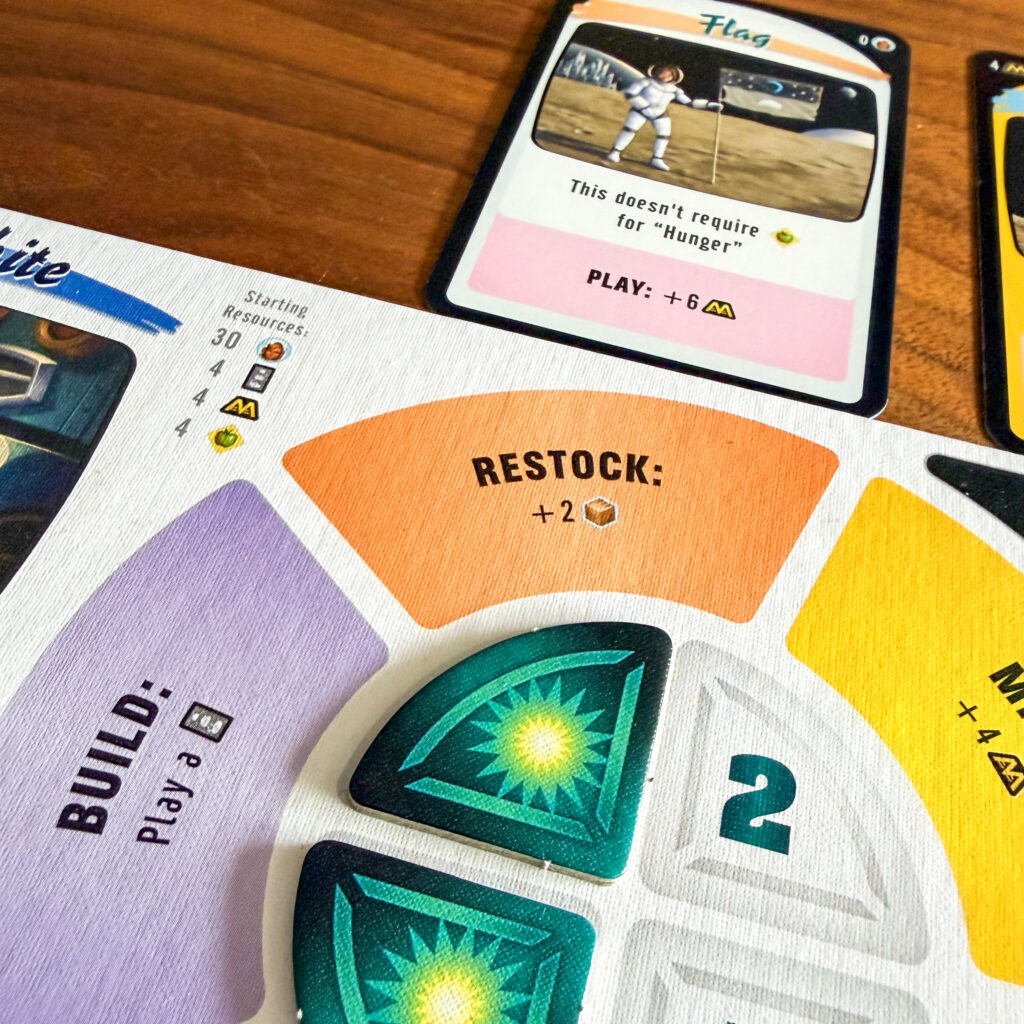
After each event, you try to recover. Using whatever resources you managed to secure, you invest in new structures, upgrades, or systems from the market, adding them to your colony. These improvements make you stronger, more efficient, and better prepared or at least that’s the illusion. Because every step forward feeds back into the system.
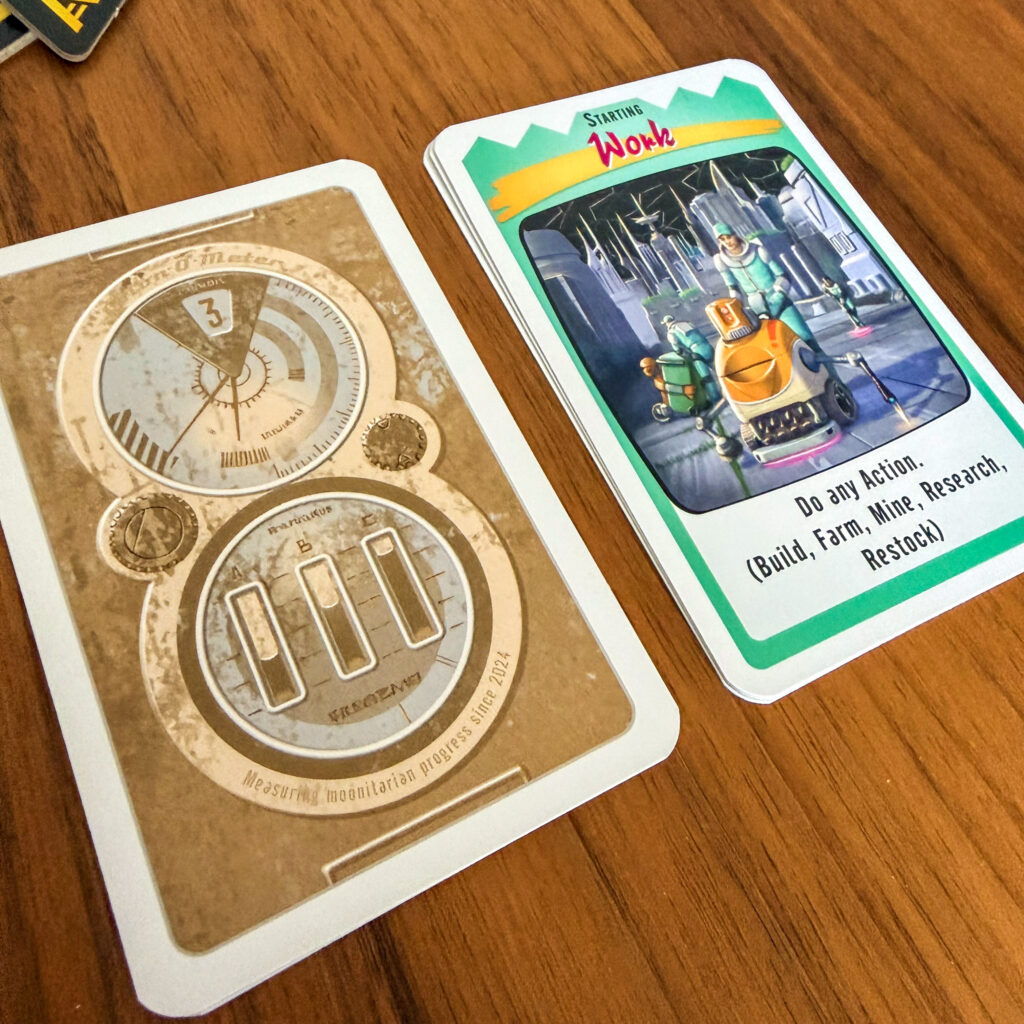
New cards enter the shared deck, increasing its size and unpredictability, quietly stacking the odds against everyone at the table.
As the game progresses, the tone shifts. Early turns may feel manageable, even hopeful, but that feeling doesn’t last. The deck becomes heavier with problems, and combinations of effects start to hit harder. What once felt like strategy becomes improvisation. You are no longer building toward something, you are holding things together, trying to delay the inevitable collapse just a little longer than the others.
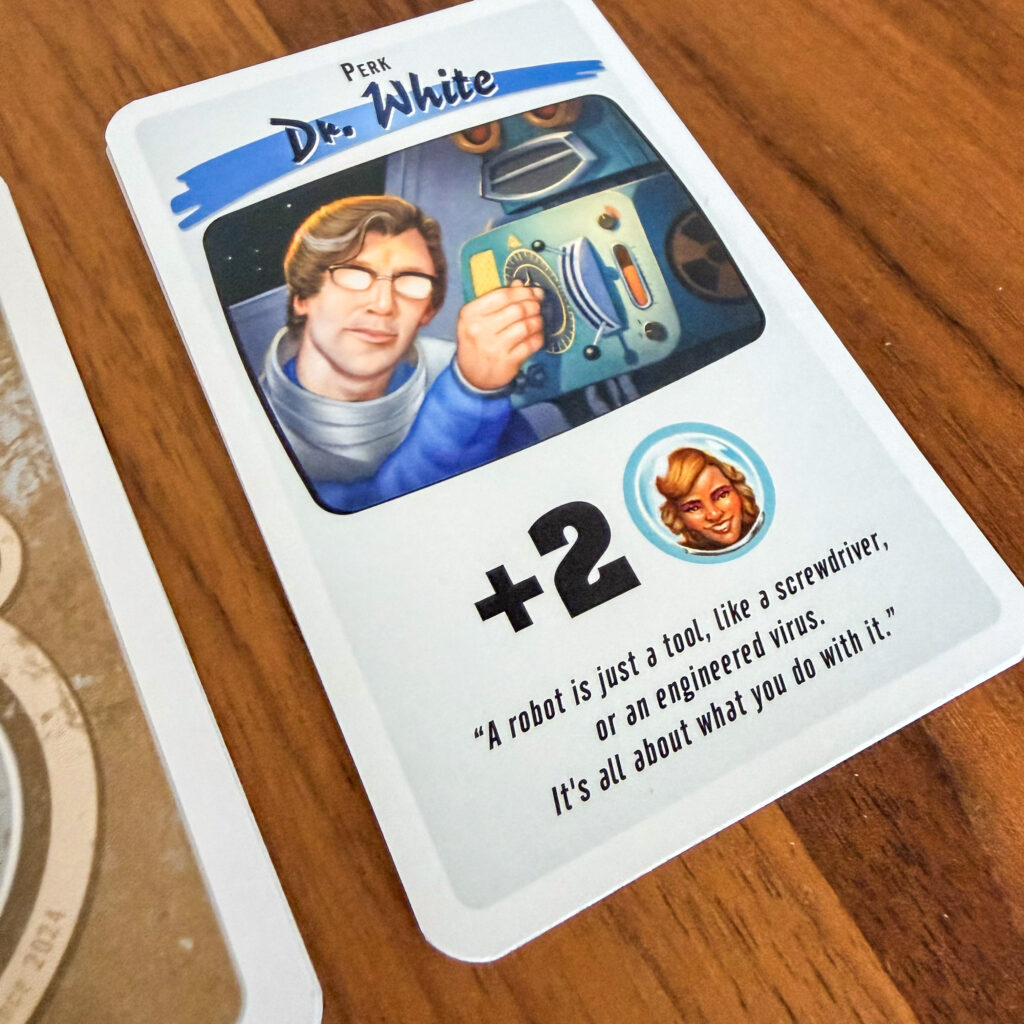
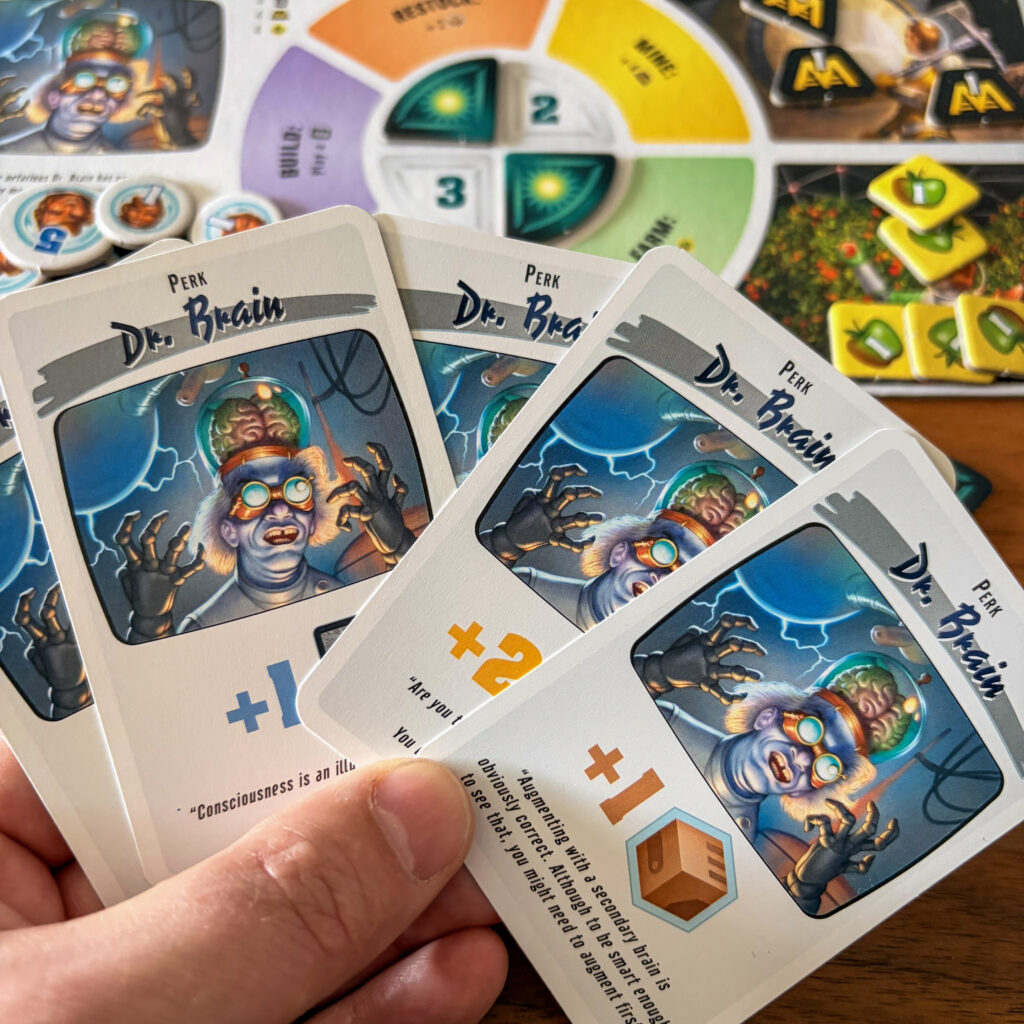
Your colonists are the core of everything. They are your workforce, your lifeline, and your most fragile resource. When disasters strike, they are often the first to go, and once they’re gone, your options shrink rapidly. Protecting them becomes more important than growing your colony, because without them, your system simply stops functioning.
The game continues in this relentless cycle reveal, resolve, react, rebuild, until the breaking point is reached.
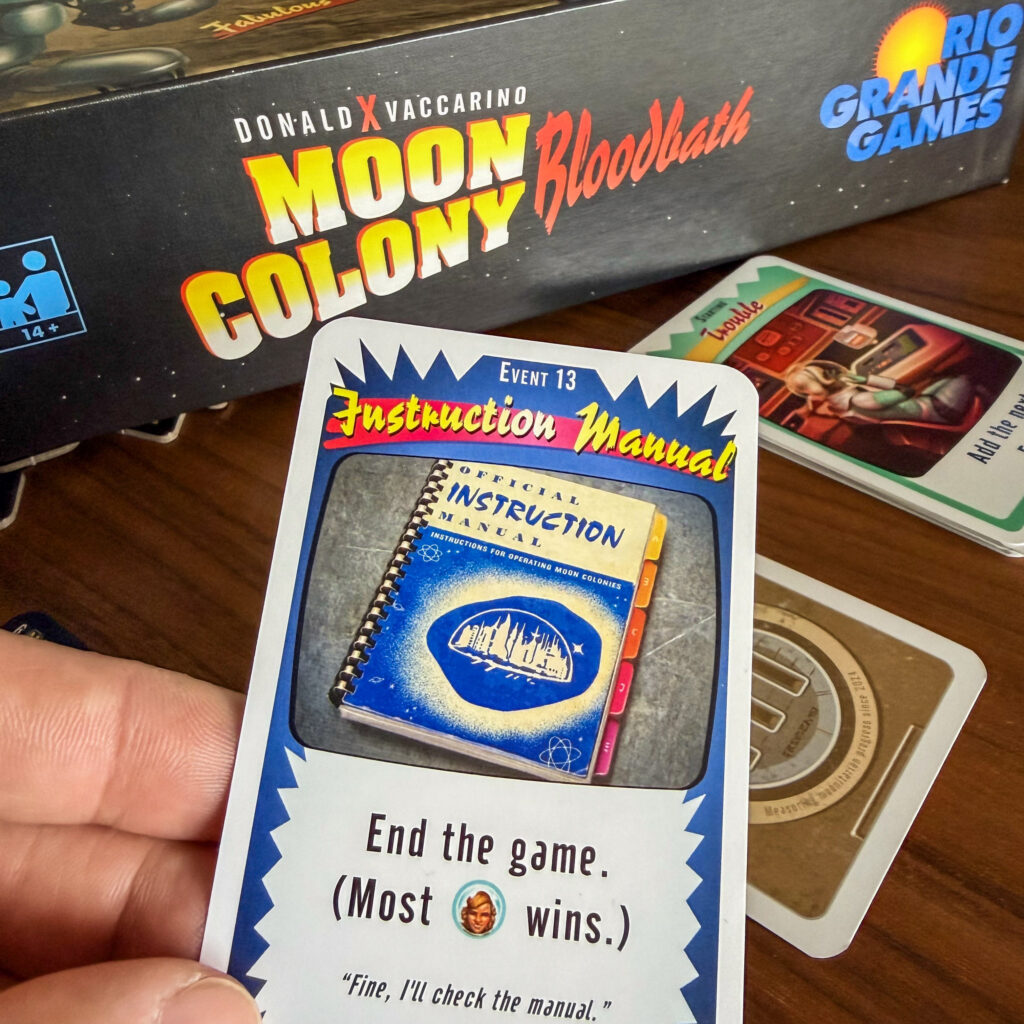
Either the shared deck runs out, exhausted from the chaos it created, or a player loses all of their colonists, triggering the end. At that moment, the dust settles, and what remains of each colony is all that matters.
Victory in Moon Colony Bloodbath is not about success in the traditional sense. It is about survival under pressure, about managing failure better than anyone else. In the end, the winner isn’t the one who built the best colony, but the one who watched everything fall apart… and still had something left standing.

Final Conclusion & rating
Weight: 2.18/ 5
Replayability: 7
Our rating: 7 out of 10 dices
In the end, what surprised me most is how smoothly the game plays, especially considering the type of core mechanism it uses.
This is not a slow or cumbersome experience. Turns move quickly, the flow never really breaks, and most of your time is spent doing exactly what you want to be doing: reading cards, playing them, and watching their effects unfold.
The game stays sharp and focused, without drowning the player in unnecessary complexity.
The theme plays a big role in that enjoyment as well. It feels well integrated and easy to connect with on a personal level. There is something inherently appealing about the idea of building a life beyond Earth after all, who wouldn’t want to live on the Moon? That sense of wonder carries the experience and gives weight to even small decisions.
That said, card-driven games are usually not my personal favorite. The relatively high level of luck can sometimes make outcomes feel out of your control, and in a game like this, that unpredictability is very present.
Still, it fits the design remarkably well. The chaos isn’t just a side effect, it is the game. And somehow, that makes it easier to embrace.
Taken together, the fast pace and the strong thematic fit make this a game that feels welcoming without being shallow. It’s engaging, efficient, and satisfying, and it left me wanting to get it back on the table rather than packing it away.
Because at its core, it taps into something simple and compelling: no matter how bad things get, you just want to stay alive 😁
🙏 Thanks to Rio Grande Games for providing this review copy and the opportunity to write about it.