Summary
👥 A game for 2 – 4 spelers
⏳ Play time is 15 – 30 minutes
🏢 Publisher is Alderac Entertainment Group
Introduction
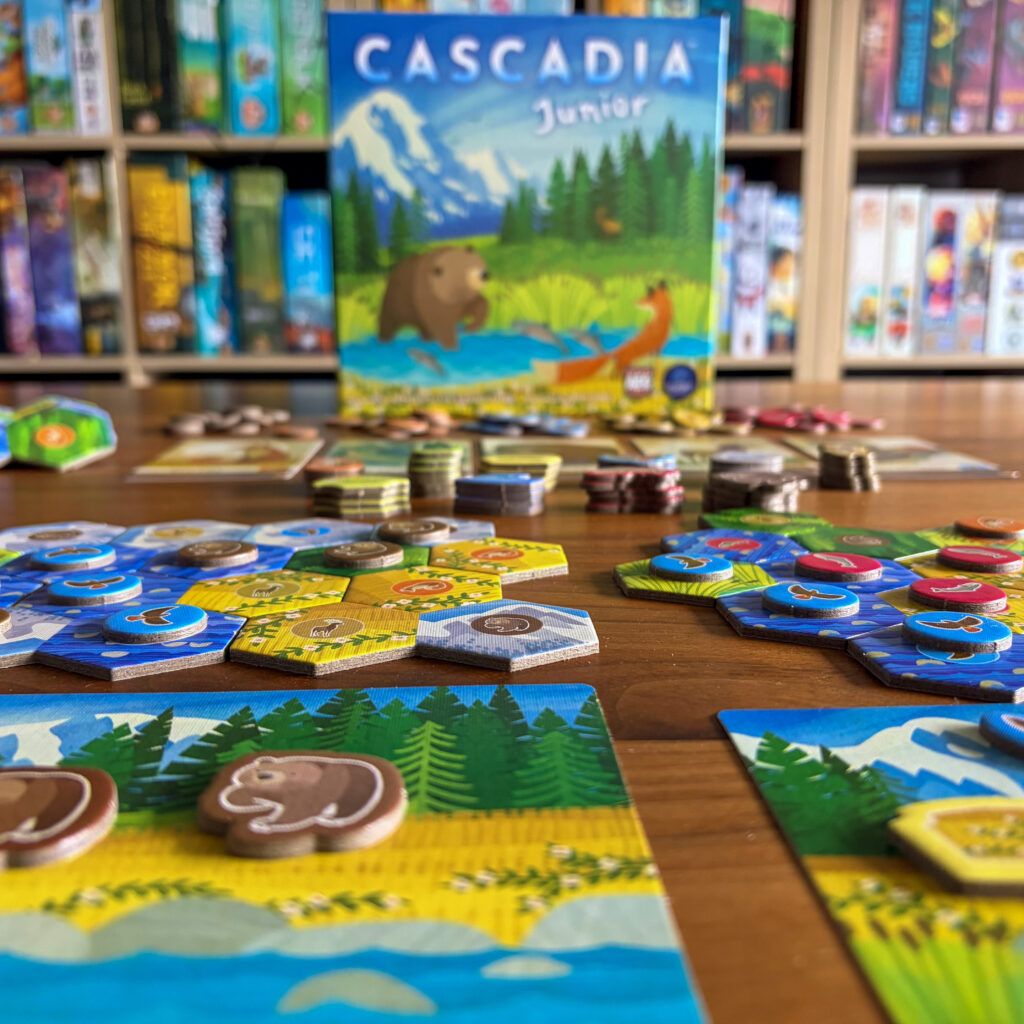
Some games immediately feel warm and inviting, as if they are drawing you to the table with open arms. Cascadia Junior is exactly that kind of game: colorful, friendly, and surprisingly clever. It is an accessible version of the popular Cascadia, but fully designed for young players without adults getting bored.
The game is all about building your own mini ecosystem with a growing landscape of forests, rivers, mountains, prairies, and wetlands, where animals gather in groups of three. As the rulebook says, players try to build “the most harmonious landscape” by cleverly grouping habitats and animals.

Let’s get in on the table
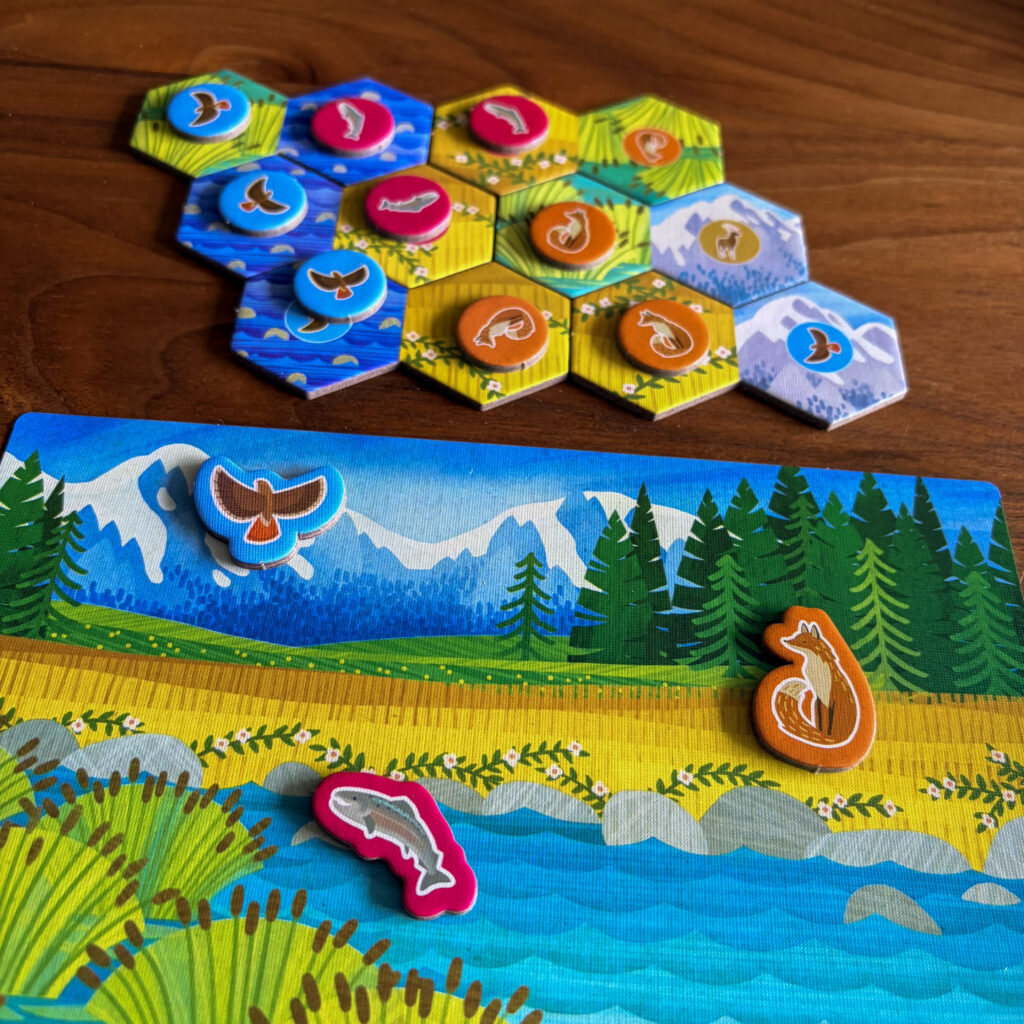
Cascadia Junior is a family-friendly tile-laying game in which each player builds their own “Environment” of Habitat Tiles, which consist of two hexagons, each with a habitat and an animal that can live there.
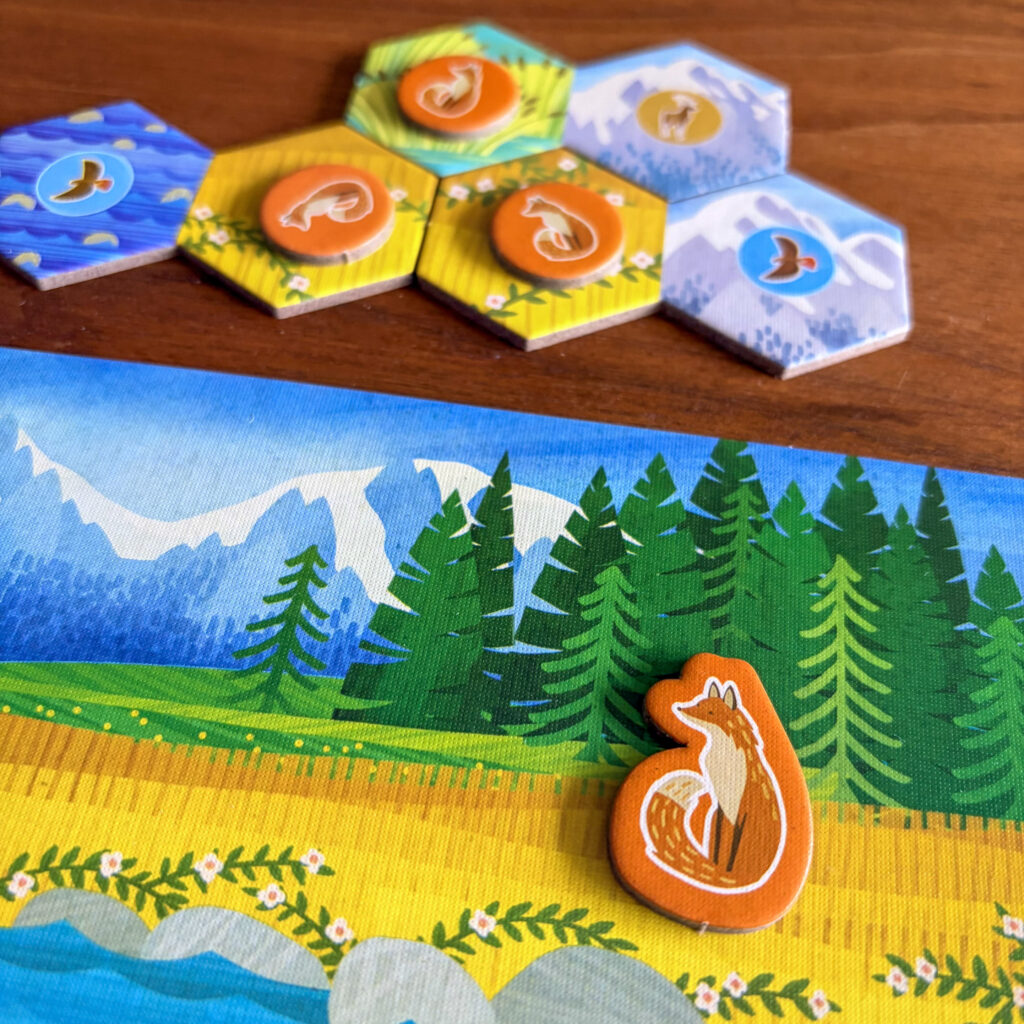
During the game, you draw tiles from a small market, place them into your landscape, and try to create smart combinations. If you manage to connect three of the same animals, you may cover them with cute wooden Wildlife Markers and earn a Wildlife Sighting Token for your Panorama Board.
At the end of the game, you also score points for large connected areas of the same habitat. The result is a beautiful, self-built nature panorama full of animals and landscapes.

The game consists of a total of 10 turns per player. Each player performs the actions below, after which the next player takes their turn.
-You choose a tile from the market;
-You place it in your landscape;
-You check whether you have formed a group of three animals;
-You refill the market.
The game ends once everyone has placed exactly 10 tiles, in addition to the starting tile you received at the beginning.
Let’s take a closer look at the actions
Choose Land
In the middle of the table there are always two face-up tiles. You choose one of these two habitat tiles from the market.
Add Land
Now you place the chosen tile into your existing landscape, making sure at least one side connects to another tile. You now try to bring animals of the same species together, connect habitats into larger areas, and also think ahead about what might still be possible later on.
Check Wildlife
If you have three animals of the same species connected across the tiles, you may take three wooden Wildlife Markers of that animal and place them on the tiles, then take a Wildlife Sighting Token and place it on your Panorama Board.
The shape of the three animals does not matter as long as they are connected. In Advanced Mode, however, the shape must match the pattern shown on the Wildlife Card.
Refill the Market
You reveal a new tile from the face-down stack so that there are again two tiles available for the next player.
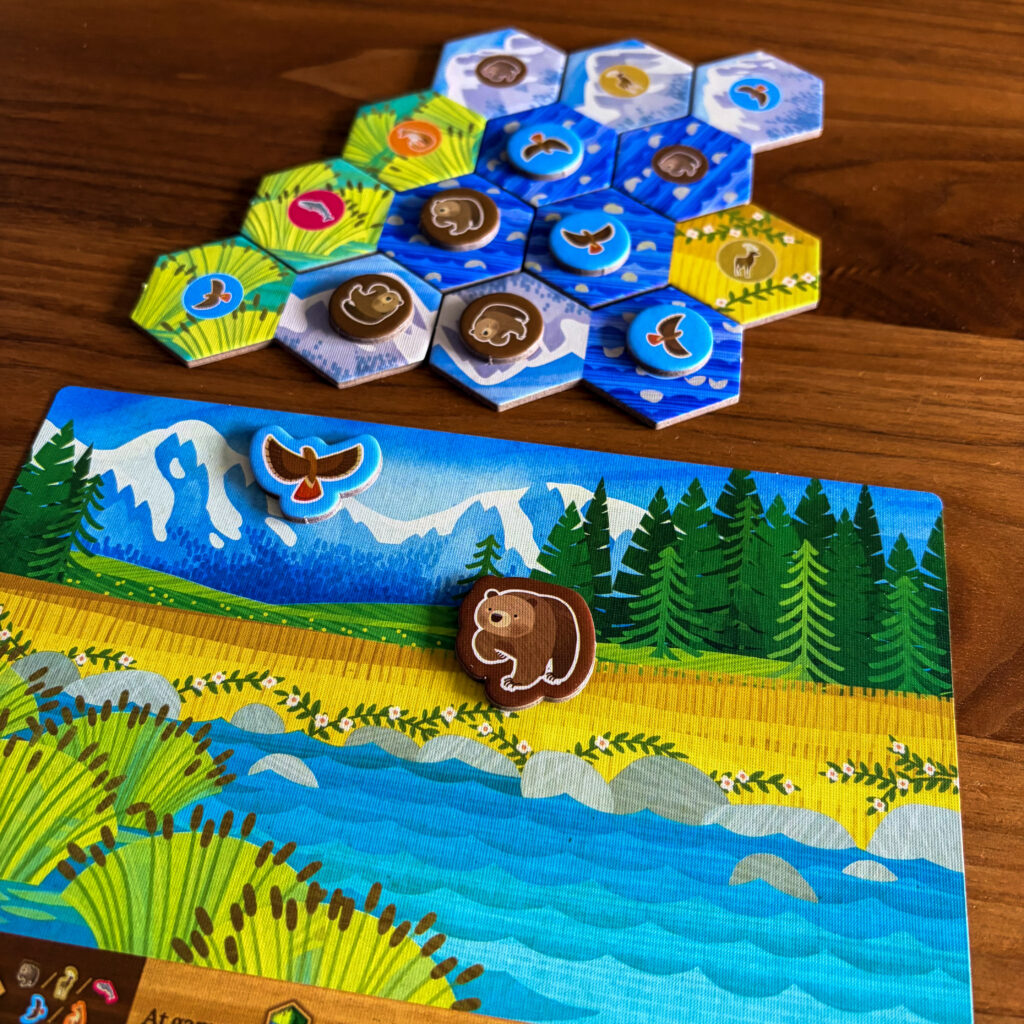
The game ends once everyone has placed 10 tiles. One tile will remain unused in the market. Now a final important step follows:
Check Habitats
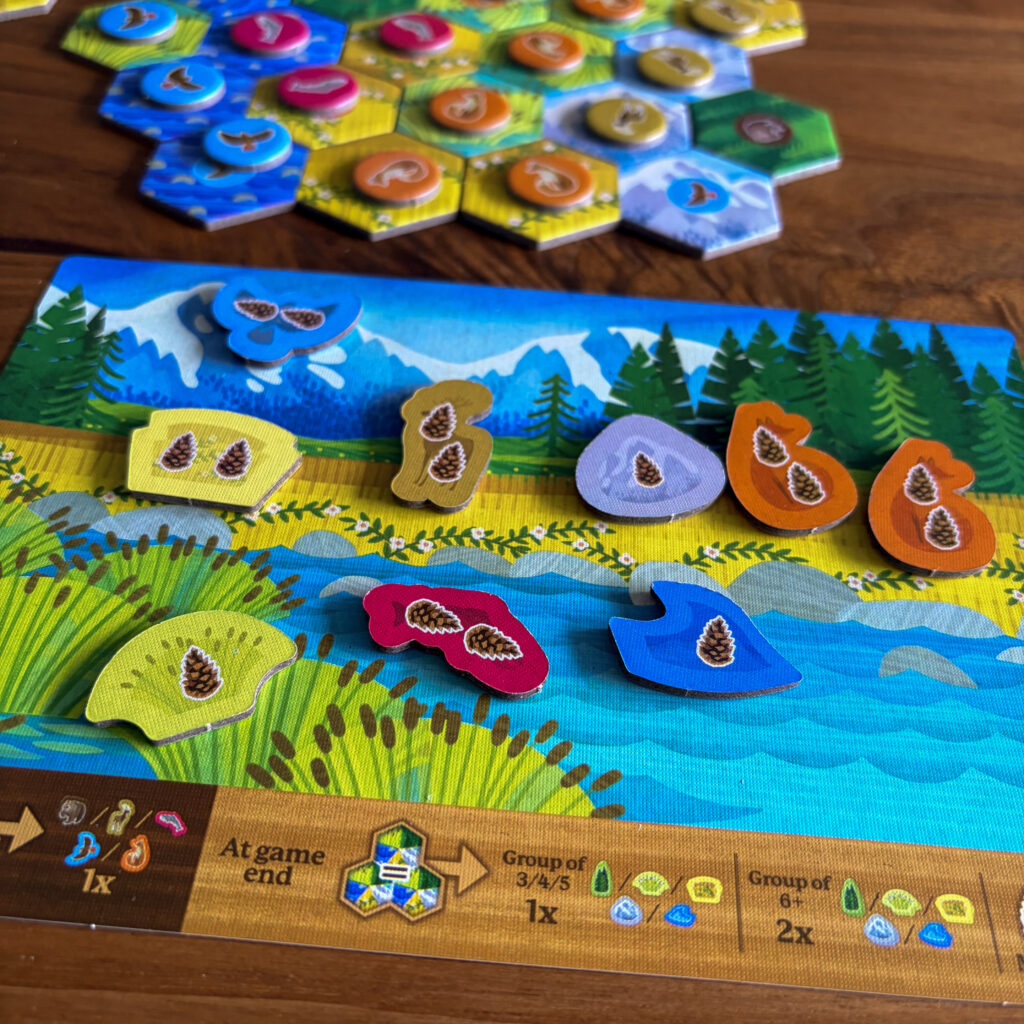
For each of the five different habitat types in Cascadia, you check whether you have an area of 3 or more connected hexagons.
– With 3–5 hexagons you receive 1 Habitat Sighting Token
– With 6 or more you receive 2 tokens
Final Scoring
All Wildlife and Habitat Sighting Tokens you have collected during the game are flipped over. On the back you will find Conifer Cones which are worth 1 or 2 point. You count up all theses Conifer Cones and the player with the most points is the winner.
Final Conclusion & rating
Weight: 1.70/ 5
Replayability: 8
Our rating: 8 out of 10 dices
Cascadia Junior is exactly what a good junior version should be, light, accessible, beautifully designed, and just a little bit strategic. The game offers enough depth to keep adults engaged, while still being simple enough for children from the age of six.
The turns are short, the choices are clear, and building your own landscape feels satisfying every time. The combination of immediate rewards, scoring animals during the game, and end-game scoring with habitats keeps all players engaged until the very end. Especially the scoring of the animals and placing them on your Panorama Board will be something they really enjoy, even though it doesn’t really matter where or how you place them.
Whether Cascadia Junior is truly necessary if you already own Cascadia is really a matter of personal preference. For us, this is a very welcome gateway game, even though we already play plenty of games at home. This version simply plays a bit faster and is slightly less tactical than the base game, which means children can play more independently without needing frequent help. So yes, we think this is just a very nice and enjoyable version!
For families who love nature, puzzling, and beautiful game components, Cascadia Junior is an absolute must-try.
Thanks to Alderac Entertainment Group for this review copy and the opportunity to write a piece about it.