
Summary
👥 A game for 2 players
⏳ Play time is 60 minutes
🏢 Publisher is Fentasy Games

Introduction
A broken television lies abandoned on the pavement. Beside it, a rusted piece of metal catches the last light of the day. Somewhere in the distance, a neon sign flickers. To most people, this is nothing but garbage, the forgotten remains of things that have already served their purpose.
But then you stop.
You look again.
The television becomes a head. The piece of metal becomes a body. A few strange mechanical parts come together, and suddenly, something that was once discarded begins to look alive.
Welcome to Yukon Street.
Here, junk is no longer junk. It is imagination waiting to happen. As Makers and Hackers, you turn forgotten objects into bizarre mechanical creatures: poetic sculptures, dreaming robots, one-eyed metal monsters. These creations are called KIKAI.
And that is where the real question begins:
How far can your imagination take something that everyone else has already thrown away?

Let’s get in on the table
Place the Yukon Street board in the center of the table, choosing either the Standard or Advanced side.
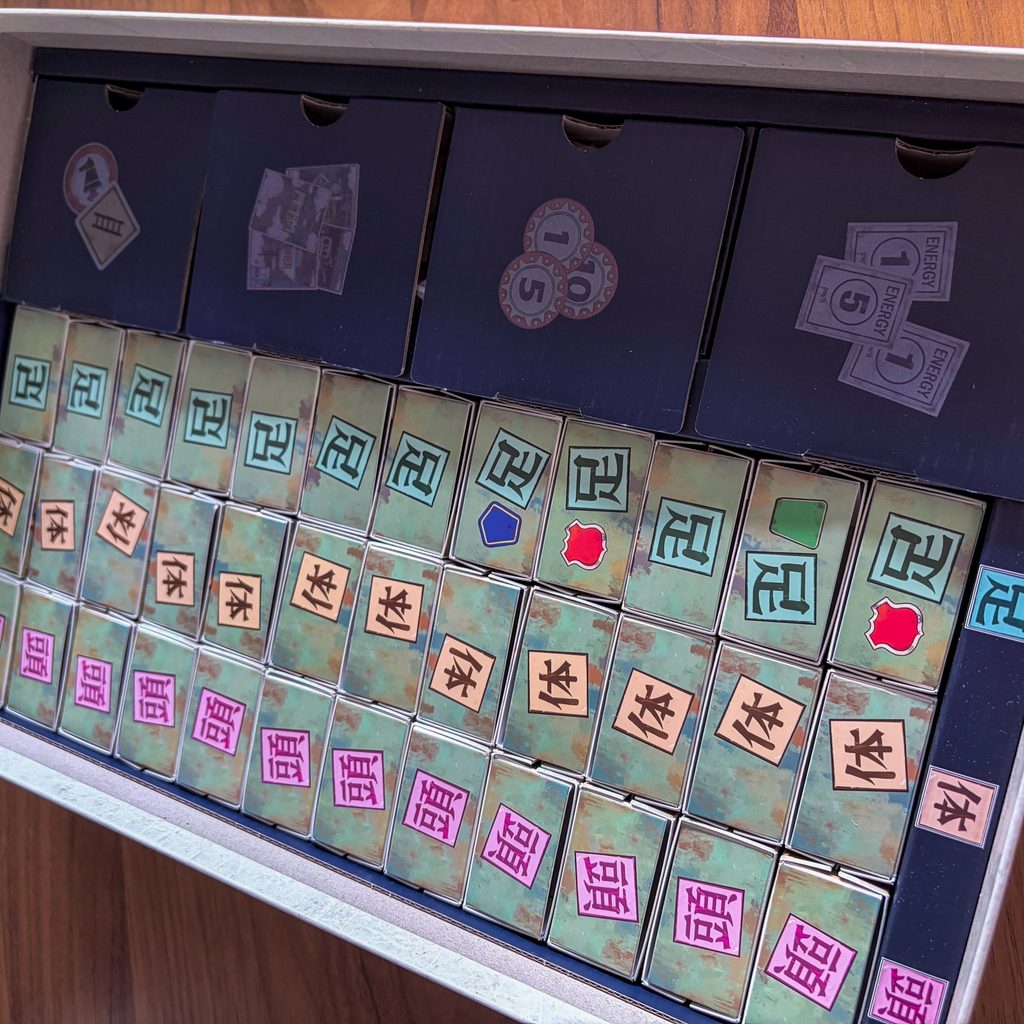
Place the Master’s Board next to it, with both players’ Renown markers on the START space and the Round marker on the first space of the round tracker. Keep the Megaphone, Ladder, Energy, and Victory Point tokens within reach. Shuffle the Foundation Tiles and place one matching the color of each District, then shuffle and place one Construction Bonus Tile in each District. Reveal three Foot, three Body, and three Head components and place them face up as the available supply. Place Fans on the Yukon Street Squares according to the number of Tool icons shown on each Square, and shuffle the District Cards to form a draw pile, revealing two cards beside it.
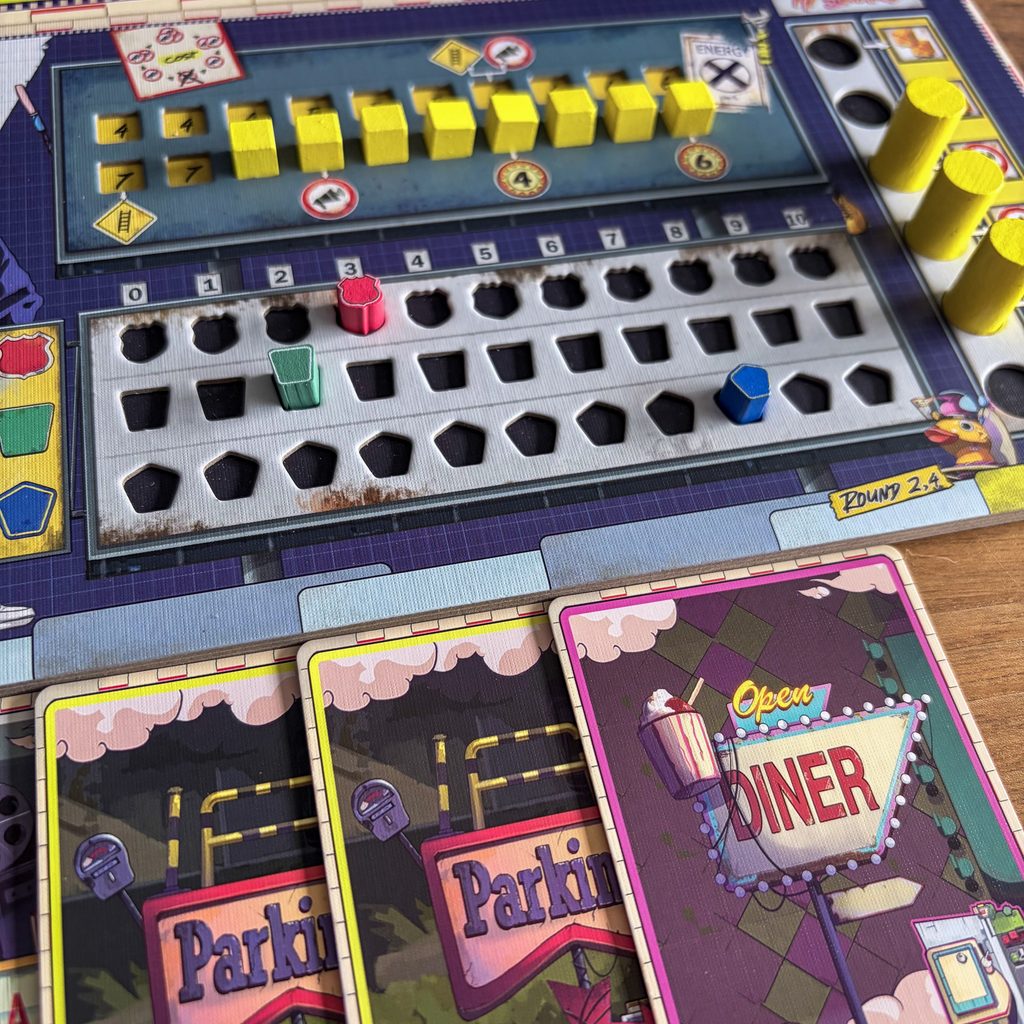
Each player takes their Player Board, Flyer Droppers, Billboards, and Player Aid Card. Place the three Influence markers on the 0 space of the Blue, Red, and Green Influence Tracks, and place all 20 Flyer Droppers on the Energy Track.
Place all six Billboards on the Player Board. The Tinkerer receives one Blue Foot and one Red Foot, while the Maker receives one Green Foot and one Red Foot. In turn order, each player places one of their starting Feet in a District of their choice, on a Foundation Tile matching its color, then advances the corresponding Influence marker by one space. The player must also deploy one Flyer Dropper on an available single-space street connected to that District.
In Standard Mode, the Foundation Tile is discarded and each player starts with 5 Energy, 1 Megaphone, and 1 Ladder. In Advanced Mode, the player receives the bonus shown on the Foundation Tile instead.
Finally, each player draws four District Cards. Once these preparations are complete, the Yellow player, the Tinkerer, begins the game.
Let’s play
KIKAI is played over a maximum of four rounds. The Yellow player, the Tinkerer, starts the game, followed by the Purple player, the Maker. Players then alternate turns until both players have completed the number of turns indicated on their Player Boards for that round. The number of turns changes between rounds: the Tinkerer has six turns in Rounds 1 and 3 and five turns in Rounds 2 and 4, while the Maker has five turns in Rounds 1 and 3 and six turns in Rounds 2 and 4. The game can also end immediately if a player places all six of their Billboards on Yukon Street.
At the beginning of each turn, the active player chooses one District Card from their hand and plays it in the current turn column of their Player Board. The District shown on the card determines where the player will perform their action. There are six Districts on Yukon Street: School, Train Station, Casino, Cinema, Diner, and Parking. A player normally plays one card, but two identical District Cards can be played together to perform an action in any District. After playing the District Card or Cards, the player performs one of the four available actions: Build a KIKAI Component, Deploy Flyer Droppers, Attract Fans, or Host an Exhibition.
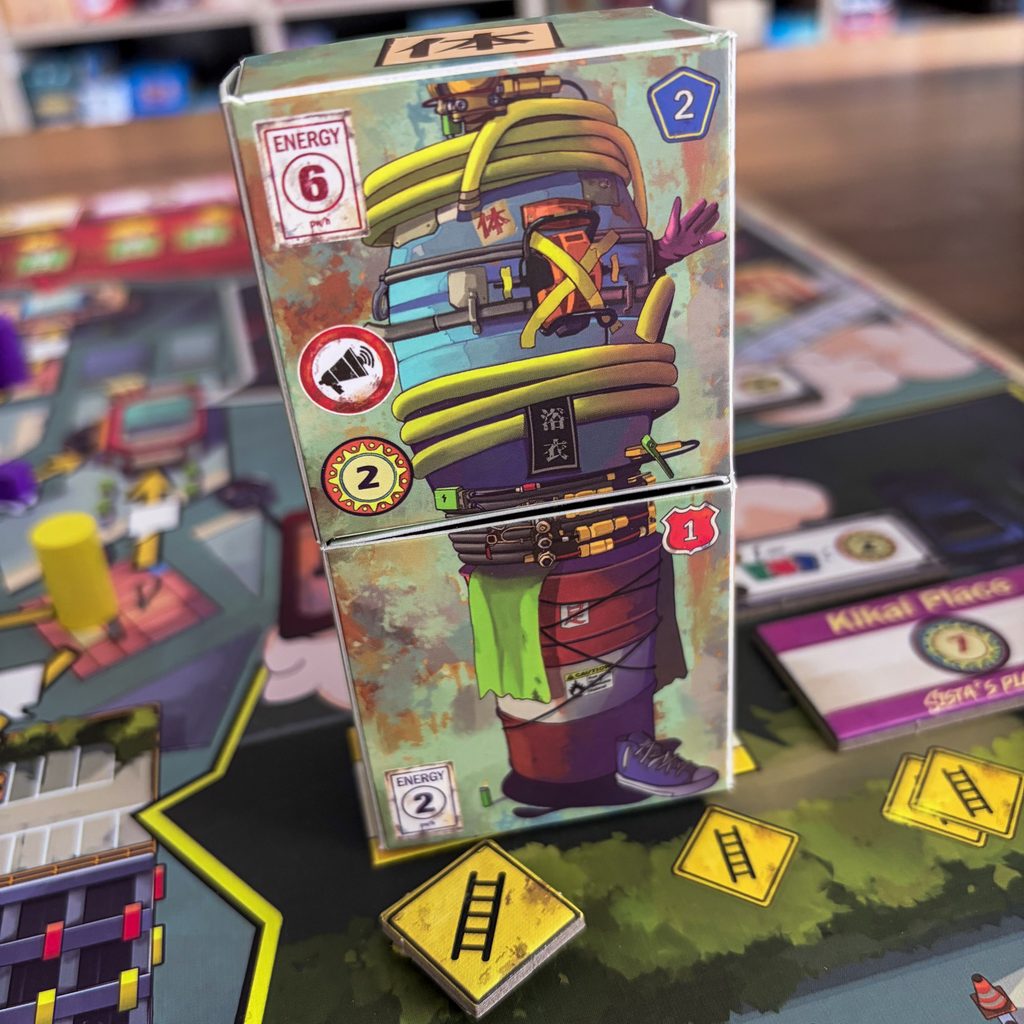
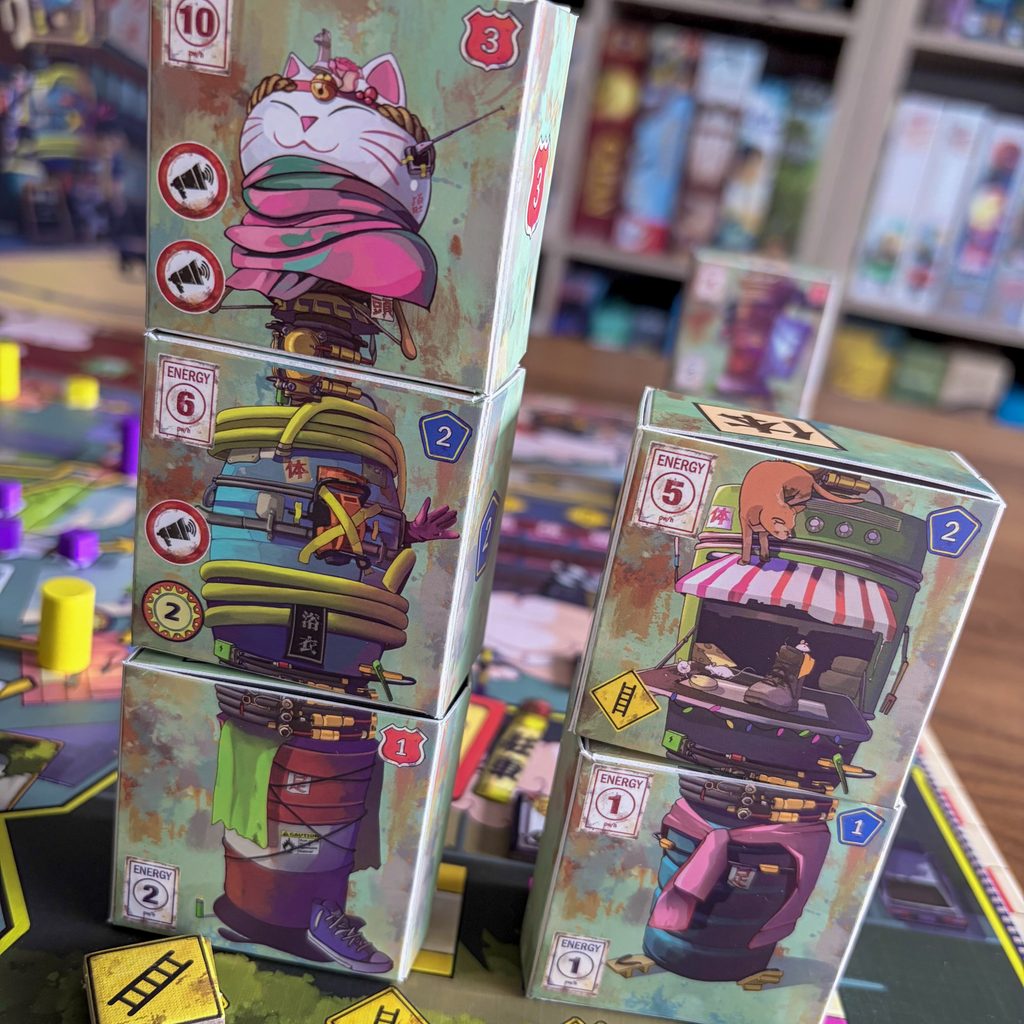
The first action is Build a KIKAI Component. The player chooses one available Foot, Body, or Head component and builds it in the District shown on the played District Card. The component must be paid for with the required amount of Energy. A KIKAI must be constructed in the order Foot, then Body, then Head, although the three components may have different colors. When a component is taken from the face-up supply, a new component of the same type is revealed from the box whenever possible, so that three components of each type remain available. Building a Foot immediately advances the matching Influence marker by one space. Building a Body can provide two additional Influence when the player later places one Ladder next to it. Building a Head can provide three additional Influence when the player places two Ladders next to it, and the Ladder required for the Body must already be present. Ladders can be placed at any time during the player’s turn. Building a component or placing a Ladder does not activate its Effect.
When a player is the first to build a KIKAI Head in a District, they immediately claim that District’s Construction Bonus. In Standard Mode this provides an immediate Victory Point bonus, while in Advanced Mode it provides the specific effect shown on the bonus tile. When building a Foot in Standard Mode, the Foundation Tile in that District is discarded without providing a bonus. In Advanced Mode, the player receives the bonus shown on the Foundation Tile before it is discarded.
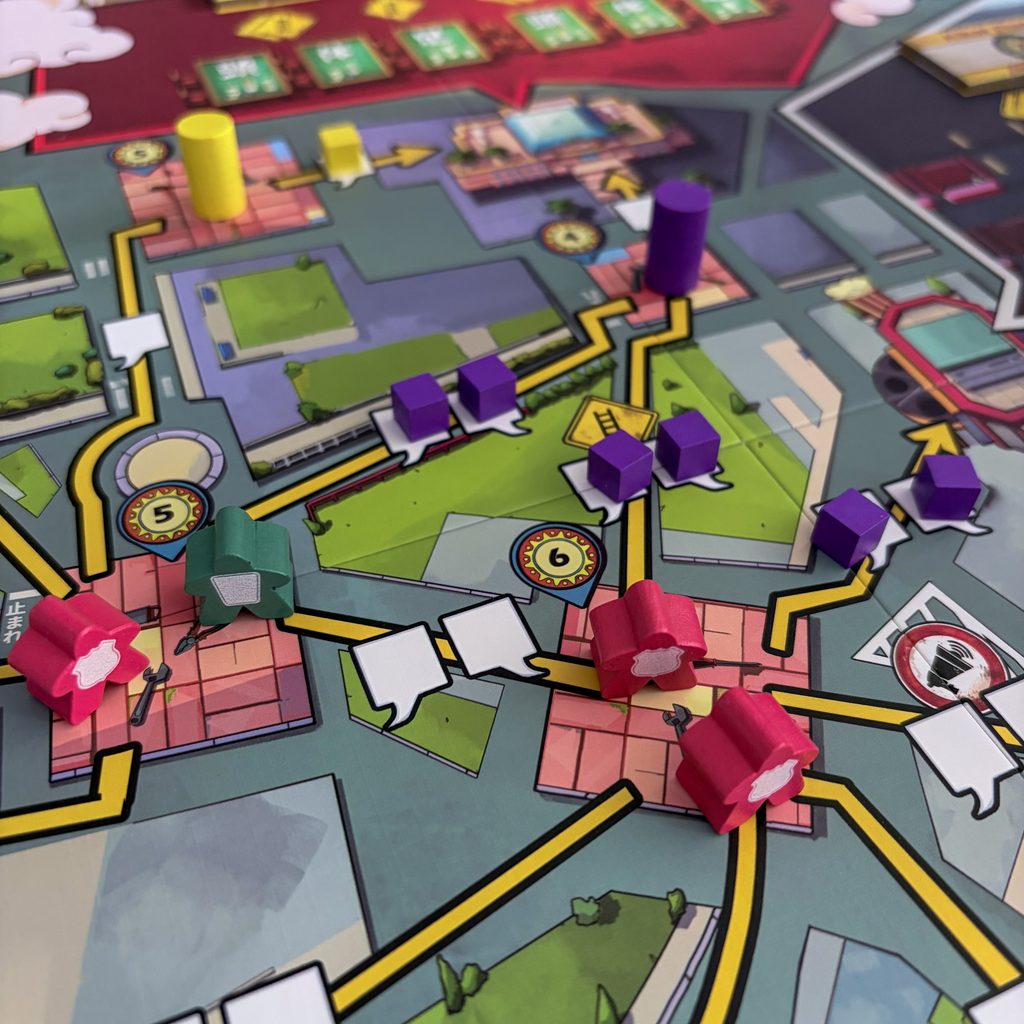
The second action is Deploy Flyer Droppers. The player takes Flyer Droppers from the left side of their Energy Track and places them on the streets of Yukon Street, starting from the District shown on the played District Card. One Flyer Dropper costs two Energy. If a street has two available spaces, both spaces must be filled together for a total cost of four Energy; a player cannot place only one Flyer Dropper on such a double space. A player’s network must start from the District shown on the card, although it can then extend through the player’s existing network. When a network reaches a Square with several possible streets, the player chooses which branch to follow. A network cannot be extended from the opponent’s Flyer Droppers, although the two networks may cross. When a network enters another District, it must stop there and cannot pass through that District and continue out the other side. The player must therefore play the corresponding District Card to start deploying from that District. Some street spaces provide immediate bonuses when occupied, and clearing spaces on the Energy Track can also unlock bonuses such as Energy, Megaphones, or Ladders.
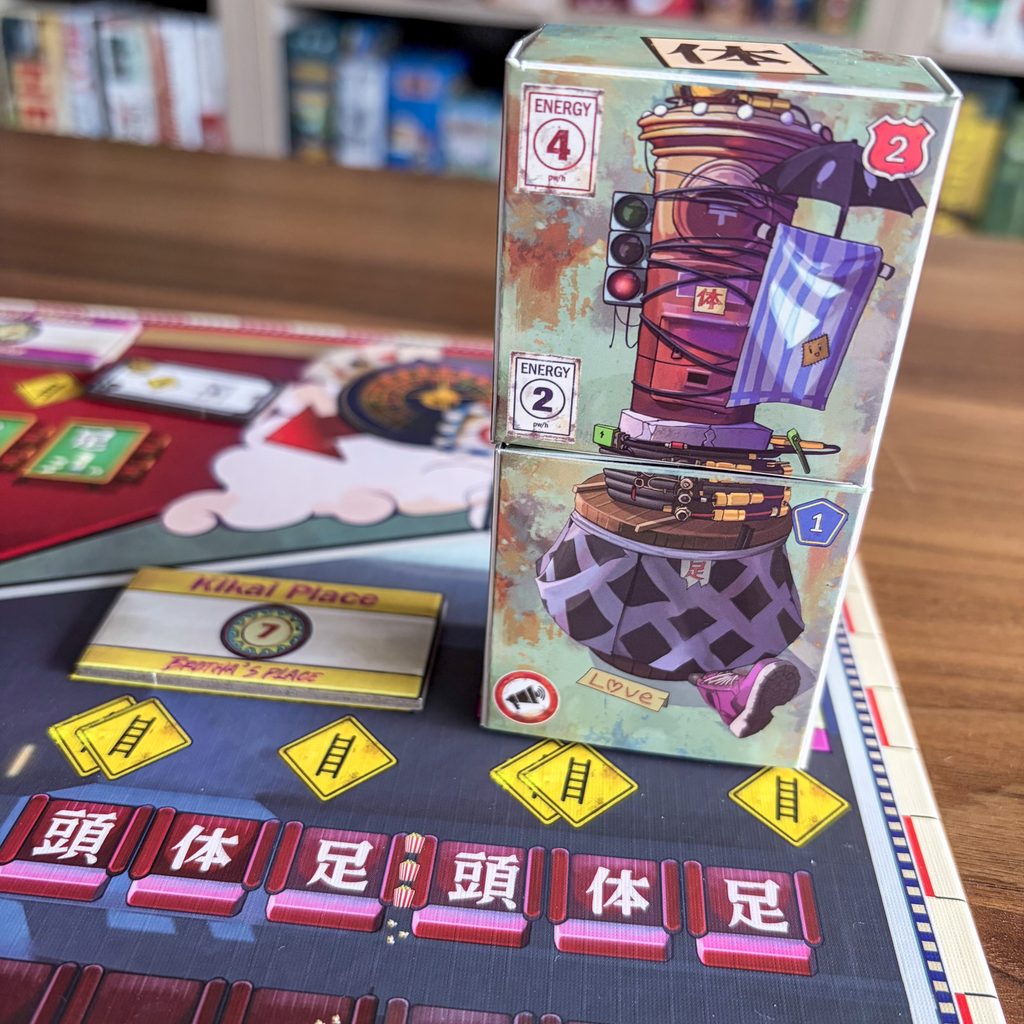
The third action is Attract Fans. This action allows the player to bring Fans from Yukon Street into the District shown on the played District Card and activate the Effects of their KIKAI components. Each KIKAI component can attract one Fan matching its color. A Foot can therefore attract one matching Fan, a Foot and Body can attract two matching Fans, and a complete KIKAI with Foot, Body, and Head can attract up to three matching Fans. The player may attract fewer Fans if they choose or if the required Fans are not available. The player must have at least the Foot of a KIKAI in the relevant District, and a Fan of the corresponding color must be able to reach that District through a Flyer Dropper network. The Fan-Zone of the component must also be empty.
The player may use either their own Flyer Dropper network or the opponent’s network to move Fans toward their KIKAI. When using the opponent’s network, the player pays one Energy directly to the opponent for each Flyer Dropper present on every street used. For each Fan successfully attracted, the player gains the Effect of the corresponding KIKAI component. The Fan remains in its Fan-Zone until an Exhibition is performed. If the player attracts the last Fan from a Square, they immediately place one of their Billboards on that Square and receive the relevant bonus. In Standard Mode, they also receive the Victory Point value printed on the Square, while in Advanced Mode they receive the Square’s bonus. If a player places their sixth Billboard, the game ends immediately and that player wins by Instant Media Victory.
The fourth action is Host an Exhibition. The player removes all of their own Fans currently in the Fan-Zones of the KIKAI in the District shown on the played District Card and places those Fans next to their Player Board. Opponent Fans remain where they are. The player may also discard Megaphone tokens to attract their own Fans from other Districts. One Megaphone allows the player to reach an adjacent District, two Megaphones allow them to reach a District two spaces away, and three Megaphones allow them to reach a District three spaces away. Because Yukon Street is a loop, three spaces is the maximum distance. Multiple Megaphones can also be used to collect Fans from several other Districts during the same Exhibition.
After collecting their Fans, the player gains Energy equal to the rightmost revealed value on their Energy Track. They then calculate Renown from the Influence value of every Fan they collected. The player advances their Renown marker on the Master’s Track by the total Influence value of those Fans. Every bonus space reached on the Master’s Track is resolved immediately. Once the Exhibition is complete, the Fan-Zones that were cleared become available again for future Attract Fans actions. An Exhibition can also be performed in a District containing no Fans and no KIKAI components. In that case, the player still gains Energy, and they may use Megaphones to collect Fans from other Districts if they wish.
After completing the main action, the player may perform one additional action by discarding one Megaphone token and playing another District Card. Only one additional action is allowed during a turn. The additional action follows the same rules as the main action. After finishing all actions, the player must take one new District Card. They may choose one of the two face-up cards or draw the top card of the District deck. They may then discard one Ladder token to draw an additional random District Card, and may repeat this as many times as they wish. The face-up offer is then refilled to two cards.

Once both players have completed all of their turns for the round, the round ends. First, all District Cards played during the round are collected, shuffled, and placed underneath the remaining draw pile. The players then receive their round reward based on their position on the Master’s Track. In Standard Mode, the Victory Point value associated with the player’s reached row is multiplied by four in Round 1, by three in Round 2, and by two in Rounds 3 and 4. In Advanced Mode, the effect of the line reached on the Master’s Track is applied instead. After the rewards have been resolved, both Renown markers return to the START space and the Round marker advances to the next round. The game continues in this way through Round 4 unless a player achieves an Instant Media Victory by placing all six Billboards first. If the game reaches the end of Round 4, final scoring takes place. In Standard Mode, one VP for every five Energy, every two Megaphone tokens, and every two Ladder tokens. The player who attracted the most Fans during the game receives five additional Victory Points, unless the players are tied. Players also lose Victory Points for Foundation Tiles that are still present on Yukon Street. In Advanced Mode, players gain one Victory Point for every Fan they collected and one Victory Point for every point of Influence on their three Influence Tracks. The player with the most Victory Points wins. If there is a tie, the player with the most Red Fans wins; if the tie still persists, the rulebook instructs the players to start a new game.
Conclusion & end score
Difficulty: 3.33/ 5
Re-playability: 8
Our score: 9 out of 10 dice
KIKAI: Bricolage Heads is a game that surprised us in the best possible way. What initially looks like a colourful and unusual two-player game quickly reveals itself to be a deeply strategic and highly interactive experience. Every decision matters, from the KIKAI components you build and the routes you create on Yukon Street to the moment you decide to attract your Fans or cash them in during an Exhibition. The combination of card management, resource management, network building and timing creates a constant sense of tension, and there is very little room for careless decisions.
One of the things we enjoyed most is how well all of these mechanics work together. Your actions constantly influence your opponent, whether you are competing for the best routes, using their network, racing for Construction Bonuses or trying to empty a Square before they do. This makes KIKAI feel like a true two-player duel rather than a multiplayer game simply adapted for two.
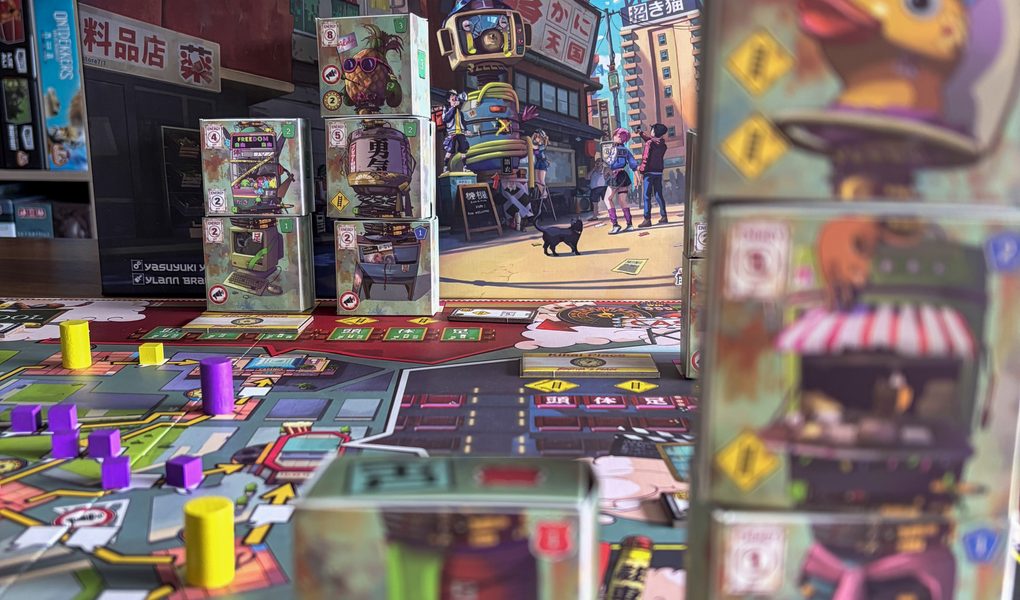
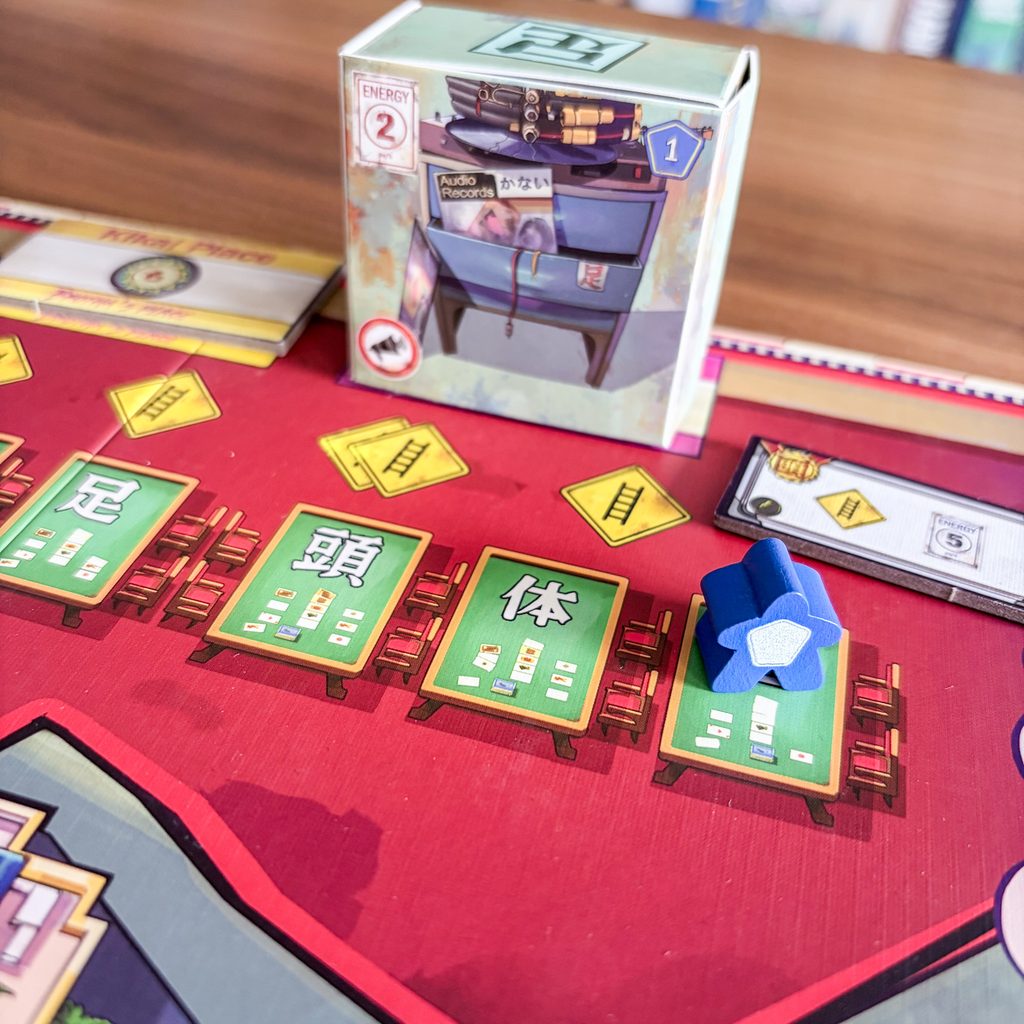
We also absolutely love the artwork. The visual identity of KIKAI is one of its biggest strengths for us. The colourful KIKAI creations, the urban setting of Yukon Street and the overall presentation make the game stand out immediately on the table. As your creations grow throughout the game, the board becomes increasingly impressive, which adds a lot to the experience.
That said, KIKAI is not a game we would recommend to everyone. The first few games can feel overwhelming because there are quite a few rules, icons and interactions to learn, and mistakes can be punished heavily. The rulebook could also have been clearer in places. However, once the systems click, the game becomes much more fluid and the depth really starts to shine.
For us, KIKAI is a fantastic example of how much strategic depth can be packed into a dedicated two-player game. It is tense, interactive, rewarding and, above all, gives you the feeling that every decision has a purpose. It is the kind of game that makes you want to play again immediately, not because the previous game was easy, but because you already know exactly where you could have played better.
Personally, the combination of its striking artwork, clever mechanics, constant interaction and impressive strategic depth makes it one of the most enjoyable two-player experiences I have played. It may take a few games to truly master, but once it clicks, KIKAI is incredibly satisfying.
Thanks to Fentasy Games for this review copy and the opportunity to write about this game.